
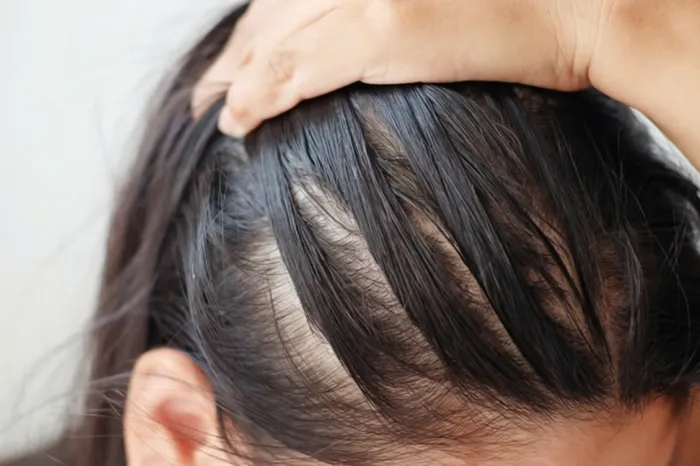
Hair loss, particularly thinning hair, is a widespread concern for many people. Female pattern hair loss, also known as androgenic alopecia, affects millions of women across the globe. It often begins gradually and becomes more noticeable as time goes on. Although treatments like minoxidil and prescription drugs are commonly used, scientists are now paying renewed attention to alternative approaches.
A recent scientific review has put the spotlight on Polygonum multiflorum, a herb known as He Shou Wu in Traditional Chinese Medicine. This medicinal root has a long history of use in China to promote hair health, vitality, and longevity. Traditionally, it has been associated with achieving darker, fuller hair and enhancing scalp health. The new research examined lab experiments and limited clinical studies to better understand how the herb interacts with hair follicles. Researchers found that Polygonum multiflorum contains compounds that may help protect follicle cells, lower inflammation, and support the natural hair growth cycle.
Experts believe the herb may work through several mechanisms related to hair loss. One possible effect is its influence on dihydrotestosterone (DHT), a hormone that is known to cause follicle shrinkage in androgenic alopecia. According to lab studies, Polygonum multiflorum may help reduce DHT activity near hair follicles, shield follicle cells from early cell death, and support the active phase of hair growth. Some research also suggests it could improve blood flow to the scalp, which might help hair follicles receive more nutrients, although this idea needs more confirmation in human studies.
Dermatologists find the research promising but caution that it is still very early. Most of the evidence comes from laboratory tests, not large human trials, so it cannot yet be confirmed how effective or safe the herb is. Professionals also point out that hair growth depends on many factors, including genetics, hormones, nutrition, and general health. While Polygonum multiflorum may impact some of these areas, it is not likely to solve hair loss fully on its own.
There are questions about how the herb should be used. Traditionally, it is taken as a tea, tonic, or powder. However, oral use has raised concerns about safety, especially liver toxicity when taken in high amounts or for long periods. Topical applications, such as scalp treatments and cosmetic products, seem to be safer, but more research is needed. Because herbal supplements are not strictly regulated, the amount of active ingredients in each product can vary, making it difficult to ensure the correct dose.
Experts advise those experiencing thinning hair to consult a qualified dermatologist before trying any herbal remedies, especially oral ones. Clinically tested treatments like topical minoxidil remain the most reliable option. A medical professional can help determine the cause of hair loss and suggest the best approach. While Polygonum multiflorum represents a promising area of research with a long history in traditional medicine, safety concerns and limited human data mean caution is important for now.
