
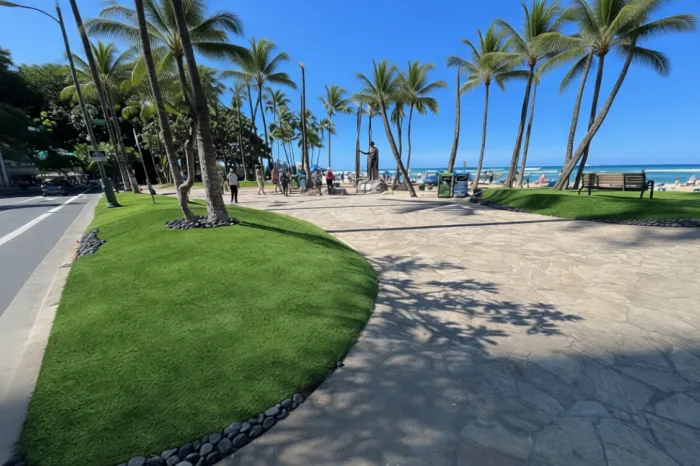
Two popular urban parks in the United States are set to undergo significant renovation projects aimed at improving safety, accessibility, and environmental stewardship. In Waikīkī, Hilton Grand Vacations is donating $1 million for enhancements at Kūhiō Beach Park, while in Tampa, city officials have proposed a $5.5 million overhaul for Curtis Hixon Park.
At Kūhiō Beach Park, the investment is intended to boost safety and cleanliness and ensure the long-term preservation of the park. Organizers highlighted the park’s status as one of Hawaiʻi’s most iconic public spaces, noting the importance of facilities that meet tourism demands while respecting local culture. The project will include the installation of interactive information kiosks to assist visitors, new electric street sweepers to recycle sand and maintain the beach, and improvements such as additional public bathrooms, picnic benches, signage, and updated landscaping. The current coconut mounds will be replaced with turf, and there will be efforts to plant native vegetation suitable for the local environment.
Tommy Waters, chair of the Honolulu City Council and a Waikīkī native, described the renovations as a promising public-private partnership, ensuring that Kūhiō Beach Park remains accessible and vibrant for future generations. Project leaders have consulted with local residents to address safety concerns and prioritize community needs in the beautification process. Laura Thielen, director of Honolulu’s Department of Parks and Recreation, emphasized the importance of planting native species that can thrive in the park’s challenging conditions.
Meanwhile, in Tampa, Curtis Hixon Park is slated for a major upgrade to address structural issues and improve event accessibility. The pavers around the park have been damaged by trucks delivering equipment for frequent public events, and the lawns suffer from drainage and irrigation problems. The planned renovations will reinforce concrete surfaces throughout the park, making them more durable and accessible, particularly for truck access during special events. Enhancements will also include the addition of canopy trees, shade structures, and lawn furniture to increase comfort and usability.
Ted Fowler, Director of Tampa’s Parks and Recreation Department, explained that the extensive scope of the project goes beyond what might seem apparent. The renovations are scheduled to take approximately 120 days, starting in May and lasting until September, a period chosen to minimize disruption during times when fewer events are held at the park. The improvements are expected to fix safety issues and ensure the park can handle heavy use for years to come.
Both cities are making substantial investments in their public spaces, recognizing the importance of safe, well-maintained, and welcoming parks for residents and visitors alike. Community engagement has played a key role in the planning process, ensuring that upgrades reflect local needs and preserve the character of these prominent urban parks.
