
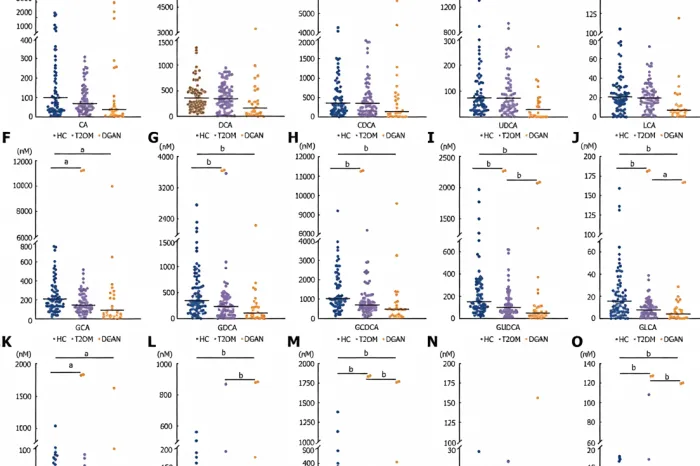
A recent clinical study has examined the connection between serum bile acid profiles and the risk of gastrointestinal autonomic neuropathy in patients with type 2 diabetes mellitus (T2DM). Researchers recruited participants at the Second Affiliated Hospital of Nanjing Medical University, comparing people with uncomplicated T2DM and those diagnosed with diabetic gastrointestinal autonomic neuropathy (DGAN), alongside a group of healthy controls. The aim of the study was to identify metabolic markers in blood that could help diagnose DGAN earlier and to assess how changes in bile acid metabolism relate to symptoms and disease progression.
Gastrointestinal autonomic neuropathy is a common complication of diabetes, leading to sensorimotor dysfunction throughout the digestive tract. Symptoms like nausea, vomiting, diarrhea, constipation, and bloating are frequent and often hard to treat. Existing tests for this condition, such as gastric emptying scintigraphy, are expensive, require specialized equipment, and are not widely available. The researchers highlighted the need for non-invasive, affordable diagnostic tools that could identify abnormalities before severe symptoms develop.
In the study, blood samples from patients and healthy volunteers were analyzed using advanced mass spectrometry. The researchers measured 15 primary and conjugated bile acids, focusing on their differences between groups. Results showed that patients with diabetes, especially those with DGAN, had lower levels of several conjugated bile acids compared to healthy controls. Among these, taurolithocholic acid (TLCA) stood out as an independent protective factor. The depletion of TLCA was linked to more severe gastrointestinal symptoms, and its inclusion in risk models significantly improved the ability to predict DGAN.
Further statistical analysis revealed that age and fasting C-peptide levels were also protective factors. The predictive model combining age, fasting C-peptide, and TLCA achieved strong accuracy in distinguishing between patients with uncomplicated diabetes and those with DGAN. Notably, the use of insulin as a therapy was found to be linked to a higher risk of DGAN, emphasizing the connection between disease severity, pancreatic function, and metabolic changes.
The study suggests that serum TLCA and other bile acids could act as sensitive biomarkers for this diabetic complication. By using these markers alongside clinical data, doctors may be able to diagnose gastrointestinal autonomic neuropathy earlier and intervene before symptoms worsen. However, researchers caution that more extensive and diverse studies are needed to confirm these findings, as the current work was limited by sample size and a single-site recruitment. Future studies will track bile acid profiles over time and review how these changes relate to the onset and treatment of DGAN.
