
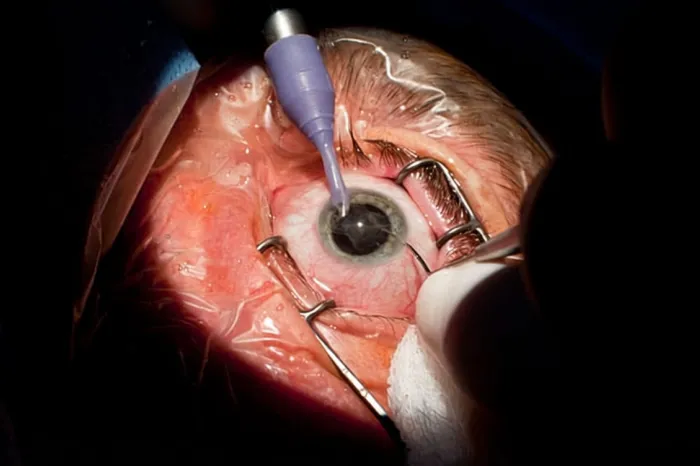
A groundbreaking surgical procedure known as tooth-in-eye surgery is giving new hope to people who have lost their sight from autoimmune diseases or severe injuries. This complex operation, technically called osteo-odontokeratoprosthesis (OOKP), is performed by Dr Alfonso Vasquez–Perez and his team at London’s Moorfields Eye Hospital, with support from St George’s Hospital. For those with healthy retinas but irreparably damaged corneas, the procedure provides a chance to go from only sensing light to regaining usable vision.
The OOKP surgery takes place in two stages, each lasting around seven hours and separated by three months. It uses the patient’s own tooth and surrounding bone to create a unique implant. First, surgeons remove a tooth and some bone, shape it to hold an acrylic optical cylinder, and then place it inside the patient’s cheek to encourage tissue growth. Meanwhile, the damaged tissue on the eye is cleared and the inside of the cheek is used to cover the eye surface.
After three months, the implant is taken out of the cheek and inserted at the front of the eye. This delicate process involves removing certain eye tissues and positioning the implant so that the optical cylinder forms a small clear window for vision. The eye ends up looking pink except for the circular opening created by the cylinder, allowing the patient to see through their own tooth-derived device.
The results can be life-changing. Dr Vasquez–Perez says this treatment is not widely available—only a handful of centers globally perform it—but it is especially valuable for patients who cannot benefit from conventional corneal transplants. In the UK, about five patients each year undergo OOKP surgery, many suffering from conditions like Stevens-Johnson syndrome or chemical burns.
The prosthesis is highly compatible with the body and can last for many years. One patient has maintained good vision for more than 20 years with the same implant. Stories from recovering patients are both emotional and inspiring, including reunions with family after years of vision loss and new excitement about seeing sports in person. Dr Vasquez–Perez emphasizes that witnessing the dramatic improvement in quality of life is the most rewarding aspect of his work.
