
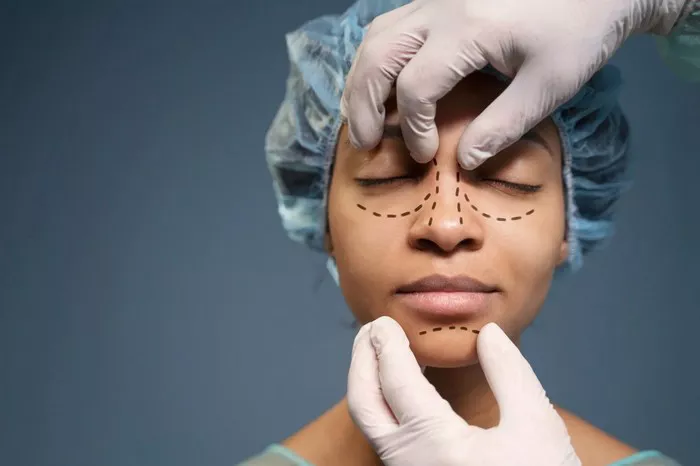
Over the past few years, the pursuit of sculpted, chiseled faces has evolved into a new cosmetic trend. While buccal fat removal gained widespread attention in 2022—propelled by influencers with sharply hollowed cheeks and celebrity speculation around stars like Lea Michele and Megan Fox—its popularity may be fading. Data from the American Society of Plastic Surgeons shows cheek implants are now seeing higher demand, signaling a shift in aesthetic preferences.
What Are Cheek Implants?
Cheek implants, similar in concept to breast or buttock implants, are medical-grade silicone inserts placed into the cheeks to alter their shape and volume. According to Johns Hopkins Medicine, malar implants sit directly on the cheekbones for a lifted, defined look, while submalar implants add fullness lower in the cheeks. Some procedures combine both types for a comprehensive facial enhancement.
Surgeons carefully secure the implants to prevent shifting, which can lead to undesired facial changes. “If not secured into place, cheek implants can shift in the face, resulting in deformity,” explains Dr. Catherine Chang, a board-certified plastic surgeon in Los Angeles.
Why People Choose Cheek Implants
Cheek implants can address cosmetic concerns ranging from naturally slim faces to age-related volume loss. “As we age, cheeks may lose volume, causing sagging and wrinkles,” notes Specialty Aesthetic Surgery in New York City. Implants restore a youthful contour, offering a fuller, lifted appearance.
Younger patients also seek implants to add dimension or enhance under-eye areas. While the hollowed cheek trend popularized by buccal fat removal remains attractive to some, many prefer a naturally plump look.
The Procedure
Cheek implant surgery typically involves anesthesia, either intravenous sedation or general anesthesia. Surgeons often make an incision inside the mouth to access the cheek area, lifting tissue to create a pocket for the implant. In some cases, incisions are placed near the eyelid or hairline, especially when combined with other facial procedures. The area is then sutured and bandaged to aid healing.
Recovery Timeline
Post-surgery swelling is normal, peaking within the first 72 hours and gradually subsiding over several weeks. Final results may take up to six months to appear. Patients are often advised to maintain a soft or liquid diet during recovery and may experience temporary discomfort as the skin adjusts to the implants.
Potential Risks
Cheek implants are invasive procedures and carry risks such as bleeding, infection, scarring, and skin discoloration, according to the American Society of Plastic Surgeons. Anesthesia also presents rare but serious complications, including breathing difficulties or cognitive issues. Additionally, cosmetic dissatisfaction can occur; surveys indicate that nearly 65% of individuals regret elective cosmetic procedures at some point.
Combining Cheek Implants and Buccal Fat Removal
Although cheek implants and buccal fat removal are opposite approaches—one adds volume, the other removes it—they can be performed together. High-positioned malar implants can enhance cheekbones while offsetting the hollowed effect of fat removal. However, patients should note that buccal fat removal is permanent, and any adjustments afterward require additional procedures such as fat grafting or injections.
Alternatives to Cheek Implants
For those hesitant about surgery, dermal fillers offer a non-invasive way to add volume, though results are temporary. Fat grafting, where fat is transferred from another part of the body to the cheeks, provides a semi-permanent option. Even makeup techniques, such as strategic highlighting and contouring, can simulate fuller or more defined cheeks.
Should You Consider Cheek Implants?
While cheek implants are growing in popularity, beauty trends come and go, but surgical results are permanent. Starting with temporary fillers can help “test drive” a new facial shape before committing to implants. Patient satisfaction varies; on RealSelf, 57% of reviewers felt cheek implants were worth it, while 43% did not. Ultimately, the decision should be made in consultation with a qualified plastic surgeon to determine candidacy and realistic outcomes.
