
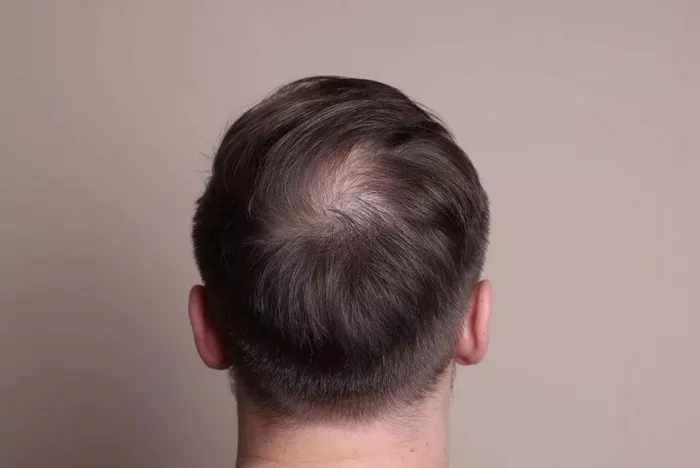
Hereditary-patterned baldness, commonly referred to as male pattern baldness, affects roughly 40% of people—men and women alike. While hair loss often begins in a person’s 20s or 30s, it can also manifest later in life, particularly after menopause in women. Despite popular belief, the genetic roots of baldness are inherited from both parents, not just the mother’s side.
Unlike the typical loss of around 100 hairs a day, individuals with hereditary-patterned baldness can lose hair in larger clumps, prompting many to seek solutions ranging from hair plugs to topical ointments. Now, a surprising new study suggests a simpler remedy may be on the horizon: sugar.
Researchers publishing in Frontiers in Pharmacology report that a naturally occurring sugar called deoxyribose could help stimulate hair regrowth. Deoxyribose, a vital component of DNA, plays a key role in maintaining genetic stability and replication. According to the study, it may also boost blood flow to hair follicles, encouraging growth.
“Male pattern baldness is such a common condition, affecting men all over the world, but at the moment there are only two FDA-licensed drugs to treat it,” said Sheila MacNeil, co-author of the study. “Our research suggests that the answer to treating hair loss might be as simple as using a naturally occurring sugar to boost the blood supply to the hair follicles.”
Interestingly, the eight-year-long study did not begin with hair loss in mind. Researchers initially aimed to investigate whether deoxyribose could accelerate wound healing by promoting new blood vessel growth. They noticed, however, that hair around treated wounds grew back faster than in untreated areas.
The team then tested the sugar on mice experiencing testosterone-based hair loss, a common cause in men. Small doses of deoxyribose once again encouraged blood vessel formation and stimulated hair regrowth.
According to the study, deoxyribose’s effects were comparable to minoxidil, the active ingredient in popular hair regrowth products such as Rogaine. Unlike minoxidil, which can cost $30 to $40 for a month’s supply and requires twice-daily application, deoxyribose is inexpensive, stable, and can be delivered in multiple forms, making it a promising candidate for further research.
Despite the promising results, MacNeil cautions that the research remains in its early stages. “The research we have done is very much early stage, but the results are promising and warrant further investigation,” she said. “This could offer another approach to treating this condition, which can affect men’s self-image and confidence.”
