
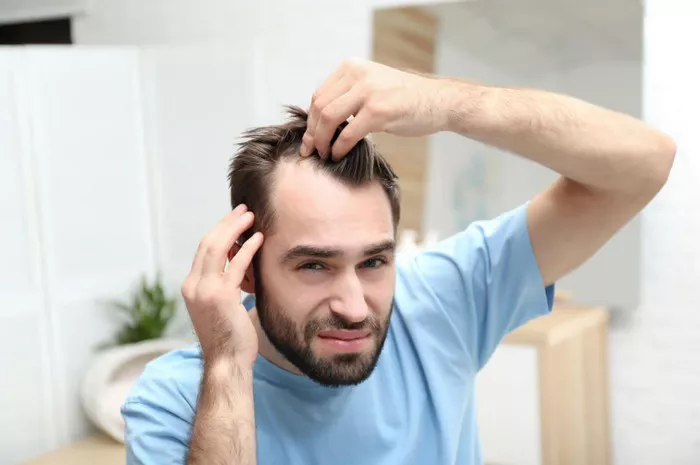
Hair loss affects millions of people worldwide, with studies estimating that 85% of men and 33% of women will experience some form of hair thinning during their lifetime. By age 30, roughly 25% of men and 12% of women will have already started losing hair.
In men, 95% of hair loss cases are caused by androgenetic alopecia, also known as male pattern baldness. In women, this condition usually results in thinning across the scalp while preserving the frontal hairline. Alopecia areata, an autoimmune disorder, causes patchy hair loss and affects an estimated 7 million people in the United States over their lifetime.
Deciding Whether to Pursue Hair Loss Treatment
Carolyn Goh, MD, associate clinical professor of dermatology at UCLA, emphasizes that managing hair loss is highly personal. She has chosen not to treat her own hair loss, finding acceptance liberating, but acknowledges that others may seek medical solutions.
“Hair loss can have an impact beyond appearance,” Dr. Goh said. “It can feel disfiguring and carries stigma, affecting how individuals are perceived and treated.”
Spencer Kobren, founder of the American Hair Loss Association, cautions against unproven treatments. “Much of the hype online is not backed by long-term clinical evidence,” he said. Ken Williams Jr., DO, founder of Orange County Hair Restoration, stresses the importance of seeking board-certified physicians for safe and effective treatment.
Established Hair Loss Treatments
Several long-standing treatments have demonstrated efficacy:
Proscar and Propecia
Both medications contain finasteride, approved for male hair loss. While effective, potential side effects include decreased sex drive, mood changes, and prostate health risks. Experts say the benefits generally outweigh the risks.
Rogaine (Minoxidil)
This topical solution enlarges hair follicles and prolongs the growth phase. Results typically appear after four months, with some users experiencing scalp irritation. Experts agree that finasteride and minoxidil remain the gold standard for male pattern hair loss.
JAK Inhibitors for Alopecia Areata
Medications such as Olumiant, Litfulo, and Leqselvi target the autoimmune processes behind alopecia areata. While side effects can occur, serious risks are rare but present, and all carry FDA boxed warnings.
Emerging Treatments on the Horizon
Several innovative therapies are in development:
- Clascoterone (Winlevi, Breezula): A topical androgen receptor inhibitor in phase III trials showing promise for hair growth, particularly in women.
- PP405: Targets dormant hair follicles, with early trials showing a 31% increase in hair density among male participants.
- ET-02: A stem cell-based ointment studied for hair regrowth and reducing graying; currently in phase I trials.
Other experimental approaches, such as stem cell therapy and fatty acid-based treatments, remain under investigation with limited clinical evidence.
Expert Guidance on Managing Hair Loss
Early intervention with evidence-based treatments is critical. “While acceptance is a solution, most people prefer to explore evidence-based treatment,” Dr. Kobren said. “Starting early with reliable medications can make a significant difference.”
Dr. Williams stresses accurate information and professional guidance. “ABHRS-certified physicians provide the best chance of effective treatment,” he said. “No one should suffer the emotional impact of hair loss without proper diagnosis and care.”
