
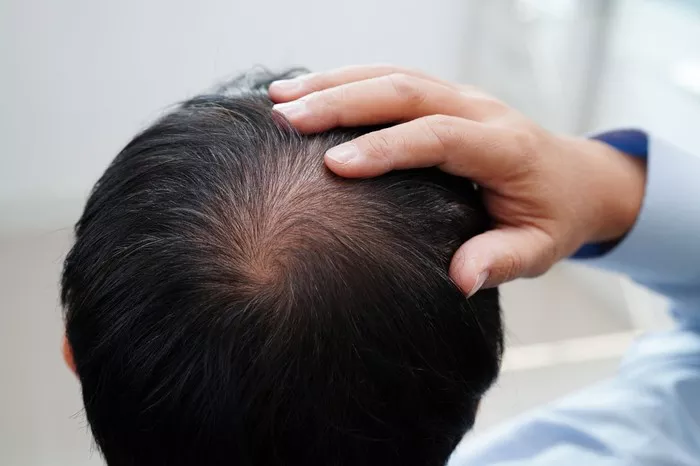
Harry James thought he had escaped hair loss. His father had gone bald at 21, and by the time James reached 26, his hair still seemed intact. That confidence disappeared during a routine video recording, when he bent down to pick something up and later noticed a lighter patch on the crown of his head.
“Once you see it, you can’t unsee it,” James recalls.
What followed was a familiar spiral for many men: scrutinizing lighting, camera angles, and scalp photos in search of alternative explanations. But the conclusion was unavoidable. His hair loss journey had begun.
Now 34, James has transformed that moment of anxiety into a platform for empowerment. He has become a leading voice in the growing online movement known as “baldmaxxing,” which encourages men to embrace hair loss rather than conceal it. With more than 57,000 Instagram followers and nearly 250,000 YouTube subscribers, James half-jokingly calls himself the “CEO of Baldmaxxing.”
The term has emerged alongside other “maxxing” trends circulating online—such as “looksmaxxing” and “self-maxxing”—but baldmaxxing carries a distinct message: acceptance over endless management. For James, the physical experience of hair loss was painless, but the psychological toll was significant.
At the time, he was studying abroad in China. Increasingly self-conscious, he sat at the back of classrooms and arrived late to avoid attention. The more he tried to hide his thinning hair, the more it dominated his thoughts and behavior.
“I had become a version of myself I didn’t recognize,” he says.
Eventually, James reached a breaking point. He feared how baldness might affect his appearance, his confidence, and even his relationship. Instead of continuing to conceal the problem, he went to a barber and opted for an ultra-short cut—a high fade.
The relief was immediate.
“It wasn’t about loving the haircut,” he says. “It was about no longer hiding.”
James’ experience resonates with many men who view hair loss as deeply tied to identity, youth, and masculinity. Alex Albring, now in his early 30s, began noticing hair thinning in his early 20s. As friends retained full heads of hair, he felt increasingly isolated.
“You start to feel like you’re missing something everyone else has,” Albring says.
Like many men, he avoided talking about it. Instead, he turned to solutions: Minoxidil, DHT-blocking shampoos, root sprays, and carefully styled haircuts. While some measures offered short-term reassurance—including strategic styling for his wedding day—none provided lasting relief.
“It became a constant mental occupation,” Albring explains. “You’re compensating all the time, instead of being present.”
Over time, the emotional cost outweighed the perceived benefits. Albring came to see hair loss as a “physical manifestation of vulnerability,” something often viewed as incompatible with traditional ideas of masculinity.
On his 29th birthday, he chose to buzz his hair short.
“It was liberating,” he says. “I stopped worrying about how I looked everywhere I went.”
Today, Albring fully embraces baldmaxxing and says he has no plans to pursue hair regrowth. For him, acceptance opened the door to a healthier relationship with self-image and masculinity—one that allows vulnerability without shame.
Online communities suggest this mindset is spreading. Forums like Reddit’s r/bald feature before-and-after photos and messages of encouragement, reinforcing a narrative shift away from concealment and toward confidence. James says he hears daily from men considering the same step.
According to James, baldmaxxing begins with confronting fear rather than managing it. Shaving or closely cutting hair is not about aesthetics alone, but about proving one’s ability to face discomfort.
“You can hide the hair, but you can’t hide the insecurity,” he says. “And the more you hide, the smaller your world becomes.”
For some, the impact is immediate. Rohde Costello, a theater student at Fordham University, began losing his hair at 19. After watching James’ videos, he decided to shave his head at 21.
“I feel more confident walking into a room now than when I had hair,” Costello says.
James believes the confidence gained from confronting hair loss often extends beyond appearance, influencing fitness, relationships, and career risks.
“Confidence is self-belief,” he says. “Shaving your head is a way of proving to yourself that you’re capable of more than you think.”
