
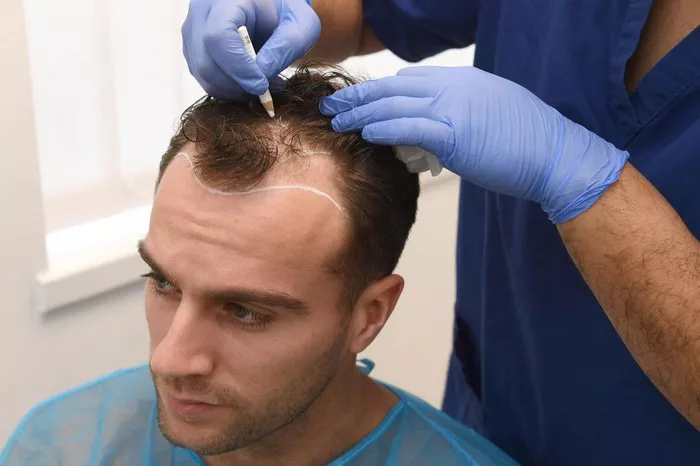
Dermatologists across India have strongly opposed the Union Health Ministry’s decision allowing dentists with postgraduate degrees in Oral and Maxillofacial Surgery (OMFS) to carry out hair transplant procedures, warning that the move could legitimise unsafe medical practices in an industry already linked to patient deaths and weak regulation.
The backlash came into sharp focus at the FUE Asia Regional Conference 2026 in Hyderabad, where senior dermatologists cited recent fatalities, regulatory contradictions and the rapid spread of unlicensed clinics as evidence that hair transplantation should remain the domain of medically trained specialists.
Two engineers in their early 30s died after undergoing hair transplant procedures in November 2024 and March 2025, allegedly performed by a dentist. The cases have become central to calls from dermatologists for tighter oversight and stricter limits on who can perform the surgery.
“Patients today are not just losing hair. They are losing time, money, hair and hope—and in some cases, their lives,” said Dr Rajetha Damisetty, organising president of the conference. “Hair transplantation is not a beauty service. It is a medical procedure with real risks.”
Ministry clarification triggers controversy
The dispute escalated after the Union Ministry of Health and Family Welfare clarified on 16 December that dentists holding OMFS degrees are permitted to perform aesthetic surgical procedures and selected hair restoration procedures within the cranio-maxillofacial region.
The statement was issued by Minister of State for Health Anupriya Patel in response to a question in the Rajya Sabha from MP Vivek K Tankha, who sought clarity on whether the Dental Council of India’s (DCI) permissions conflict with the National Medical Commission (NMC) Act, 2019. The ministry argued that OMFS specialists receive extensive surgical training and that the mandates of the DCI and the NMC are complementary.
Dermatologists, however, say the clarification confuses reconstructive surgery with the medical treatment of hair loss, which can be linked to systemic health problems.
‘Reconstruction is not baldness treatment’
Dr Kavish Chauhan, founder and secretary of FUE Asia, said the ministry relied on a narrow interpretation of a DCI circular.
“The DCI circular talks about facial reconstructive surgery,” Chauhan said. “If hair is lost due to burns or trauma, reconstruction may be justified. But treating baldness is entirely different. Hair loss is often linked to hormonal, metabolic, autoimmune or nutritional disorders. How will dentists identify those?”
He warned that failing to diagnose underlying disease before surgery puts patients at serious risk.
How the regulatory conflict began
The controversy dates back to a DCI notification issued on 6 December 2022, which allowed OMFS specialists with adequate training and infrastructure to perform aesthetic and hair transplant surgeries. The decision was based on a 2019 Gazette amendment that expanded the OMFS postgraduate curriculum to include facial aesthetics, craniofacial trauma, skull-base surgery, bone grafting and hair transplantation as a skill enhancement module.
Between 2021 and 2022, the DCI reaffirmed this position through multiple communications. Medical regulators, however, took a different view.
NMC and state regulators object
After the Telangana Medical Council sought guidance, the NMC said in June that the DCI had issued its 2022 notification without consulting the Ethics and Medical Registration Board. It reiterated that hair transplants should be performed only by specialists with recognised surgical training, such as plastic surgeons or dermatologists with appropriate credentials.
On 26 June, the Telangana Medical Council publicly stated that dentists, including OMFS specialists, do not have hair transplantation or aesthetic surgery as core subjects in their curriculum. The Telangana Dental Council later countered that OMFS practitioners are authorised under DCI rules, deepening the regulatory standoff.
Unlicensed clinics and “ghost surgeries”
Enforcement gaps have further complicated the issue. Dr Vijay Jalagam, a co-opted member of the Telangana Medical Council, said inspections across Hyderabad uncovered widespread violations.
“Out of about 100 beauty centres inspected, around 10 were operating illegally,” he said. “When dentists were found performing hair transplants, we referred them to the Dental Council, but we have received no response so far.”
Chauhan also warned about the rise of “ghost surgeries”, in which technicians, not doctors, carry out the entire procedure. “Any procedure that penetrates the skin must be performed by a doctor. Technicians can assist, but they cannot extract grafts, implant hair or administer anaesthesia,” he said, adding that low-cost online advertisements often mask unsafe practices.
Legal battles move to court
The DCI’s December 2022 notification is now being challenged in the Madras and Bombay High Courts. Dermatologists are also preparing a public interest litigation in the Supreme Court seeking comprehensive national laws to regulate aesthetic skin and hair procedures.
“This is about patient safety, not professional turf,” Damisetty said. She urged patients to verify their surgeon’s medical degree, state registration, clinic licensing, operating-theatre standards and sterilisation protocols before undergoing treatment.
“Hair often reflects internal health issues such as diabetes, thyroid disease, PCOS or nutritional deficiencies,” she said. “Dermatologists are trained to identify those. Hair transplants are not cosmetic commodities.”
While the Health Ministry maintains that its December clarification resolves jurisdictional overlap by restricting OMFS practice to the cranio-maxillofacial region, dermatologists insist the stakes are far higher—warning that without clearer laws and stronger enforcement, patient safety will continue to be at risk.
