
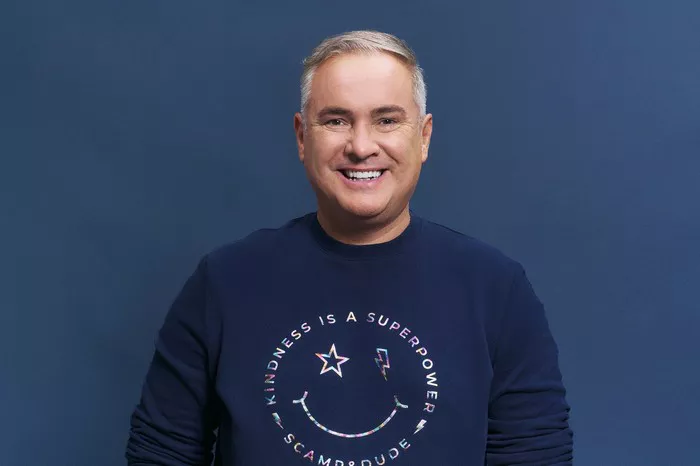
PR expert and media personality Nick Ede has spoken candidly about how hair loss, mental health struggles and a turning point in midlife led him to make life-changing decisions — including undergoing a hair transplant that he says restored not only his appearance, but his sense of self.
In his early 50s, Ede admits he spent years feeling like an imposter: outwardly confident in front of cameras and on red carpets, yet privately anxious and self-critical. Hair loss, he says, intensified those insecurities in an industry where image still carries weight.
“Every time I looked in the mirror, I felt a little less like myself,” he recalls.
To cope, Ede began hiding. He avoided rain, cancelled plans, relied on hair fibres and sprays, and carefully chose venues based on lighting. Despite trying numerous treatments, including prescription medication, his sense of control would soon unravel.
Finasteride, often described as a “wonder drug” for hair loss, initially stopped his hair from thinning. But Ede says it also coincided with the onset of disturbing suicidal thoughts. He describes moments of fear and confusion, unable to understand why his mental state had deteriorated so rapidly.
It was only after speaking with a friend — who had experienced similar side effects from the drug — that Ede made the connection. He stopped taking Finasteride immediately. Within weeks, his mental clarity began to return, though his hair loss resumed.
Medical guidance notes a small risk of suicidal ideation linked to the drug, a statistic Ede says became frighteningly personal. While he has battled depression at different points in his life, he stresses that this experience felt distinctly different and deeply alarming.
Ede also highlights the broader issue of men’s mental health, noting that according to the Movember Foundation, three out of four suicides in the UK are men. Suicide remains the leading cause of death among men under 50 — a reality he says is fuelled by silence, stigma and pressure to appear strong.
Social media, he adds, only compounds the problem. Constant exposure to idealised images of male perfection eroded his self-esteem, even with full awareness of how heavily curated those images are.
Determined to make lasting changes, Ede began addressing both his physical and mental wellbeing. He started running daily, sought therapy, and immersed himself in mental health literature, crediting author Owen O’Kane’s books for helping him better understand anxiety and emotional resilience.
Despite years spent campaigning for stroke awareness through his Style for Stroke Foundation, Ede admits he had neglected his own health. A routine check-up revealed dangerously high cholesterol levels, prompting further concern. Post-lockdown weight gain and declining confidence began affecting both his personal life and career.
The turning point came when Ede set himself a bold goal: running the London Marathon in support of The Stroke Association. Training gave him structure, motivation and accountability, with encouragement from friends including singer Alexandra Burke.
Around the same time, Ede decided to confront the issue that had haunted him for years. After extensive research, he chose to undergo a hair transplant at a London clinic, rejecting cheaper overseas options in favour of trusted care.
The procedure, he says, was physically gruelling — a 14-hour process involving thousands of grafts and intense discomfort. Recovery required weeks of careful aftercare, but the results, nearly a year on, have been transformative.
Today, Ede says the change goes far beyond aesthetics. “When I look in the mirror now, I see someone who looks and feels alive again,” he says, describing this phase as his “midlife MOT”.
He has since completed the London Marathon, prioritised his health, and launched Joyfulness Approved alongside “joyologist” Donna Easton — a platform dedicated to celebrating everyday moments of joy without resorting to toxic positivity.
Ede is clear that his hair transplant was not about vanity, but healing. “It was a quiet, restorative joy — something that had been missing for a long time,” he says.
Often labelled a midlife crisis, Ede prefers another term: clarity. “You realise how short time really is. You stop living for everyone else and start investing in yourself — mind, body and, yes, hairline.”
By sharing his story, Ede hopes to encourage other men to speak openly, seek help and see self-investment not as indulgence, but as recovery. “If it helps even one person feel less alone,” he says, “then every graft, scar and step was worth it.”
