
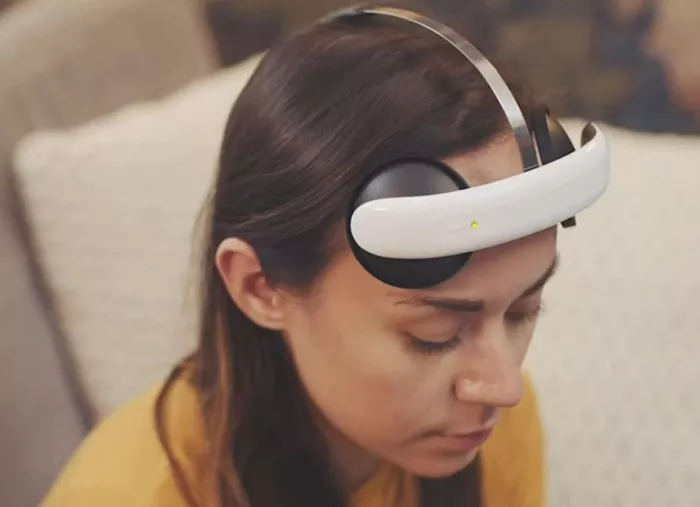
The US Food and Drug Administration (FDA) has granted clearance for Flow Neuroscience’s at-home, non-drug depression treatment, marking the first time such a device has received approval in the United States.
The FL-100 headset, which delivers transcranial direct current stimulation (tDCS), is designed to treat major depressive disorder (MDD) with the support of a companion smartphone application.
The device works by sending mild electrical currents to the brain’s left dorsolateral prefrontal cortex (DLPFC), an area often underactive in individuals with depression. This stimulation aims to enhance neuronal activity and rebalance mood-regulating chemicals, potentially reducing depressive symptoms.
Flow Neuroscience anticipates the FL-100 will be available in the US by the second quarter of 2026. The device has already been certified as a Class IIa medical device in the UK and Europe since 2019.
FDA clearance was supported by Flow’s randomized controlled clinical trial, published in Nature Medicine, which showed that patients experienced noticeable symptom improvements within three weeks of at-home therapy. The study, conducted over a ten-week period, reported clinically meaningful responses and minimal side effects.
Flow’s CEO, Erin Lee, described the FDA decision as a “watershed moment” for depression treatment and emphasized the device represents a shift from traditional pharmaceuticals to technology-based therapies with fewer side effects.
The company highlighted that roughly one-third of patients with depression fail to respond to antidepressants, and many discontinue medication due to side effects. Flow’s Chief Medical Officer, Dr. Kultar Garcha, noted that 77% of real-world users see improvements in as little as three weeks. “Treatments that were once limited to clinics can now be delivered at home, offering a scalable path to broader access to effective depression care,” Garcha said.
FL-100 has already been used by over 55,000 people across the European Union, Switzerland, Hong Kong, and the UK, where it is prescribed by doctors and utilized by several NHS trusts.
Industry analysts project the global digital health market will grow to approximately $23.5 billion by 2034, up from $7 billion in 2024. While neuromodulation therapies like FL-100 remain less common than traditional antidepressants such as SSRIs, experts are watching closely to see if FDA approval could mark a turning point in the treatment landscape for MDD.
Related Topics:
New Oral Diabetes Drug Burns Fat, Preserves Muscle, and Controls Blood Sugar, Study Shows
Exercise During Pregnancy Can Reduce the Risk of Postpartum Complications
