
SCAR LARRAINZAR, 42, of West Covina, California, thought he only needed surgery to fix a broken nose. But routine pre-surgery blood work revealed impaired kidney function—quickly escalating to kidney failure. Soon after, blood in his urine led to another shocking diagnosis: a rare form of bladder cancer. Surgery to remove the cancer left him with a bladder no bigger than a walnut. “It was painful,” Larrainzar recalls.
Additional scans discovered tumors on both kidneys, which had to be removed. For the next seven years, Larrainzar relied on nightly dialysis to remove his body’s waste. Water retention caused his weight to soar, and simple joys—like taking his son to Dodgers games—became exhausting. “I was always thinking about going home because I just felt too tired to enjoy the moment,” he says.
Frustrated, Larrainzar returned for another appointment, where he met Dr. Nima Nassiri, an assistant clinical professor of urology at UCLA David Geffen School of Medicine. Dr. Nassiri had assisted in Larrainzar’s earlier kidney surgeries. Since then, he and Dr. Inderbir Gill, chair of urology at USC Keck School of Medicine, had developed a pioneering bladder transplant technique.
“The biggest challenge is retrieving a bladder from a deceased donor while keeping all the delicate blood vessels intact,” Dr. Gill explains. “No one had attempted it before.”
The surgeons perfected the procedure in pigs, cadavers, and research-donated bodies. They believed a bladder transplant could save Larrainzar’s life—but only if paired with a kidney transplant, since a kidney’s urine output requires a bladder for storage.
When offered the procedure, Larrainzar agreed. “I felt like I had nothing else to risk,” he says. “This was my last chance for a better life.”
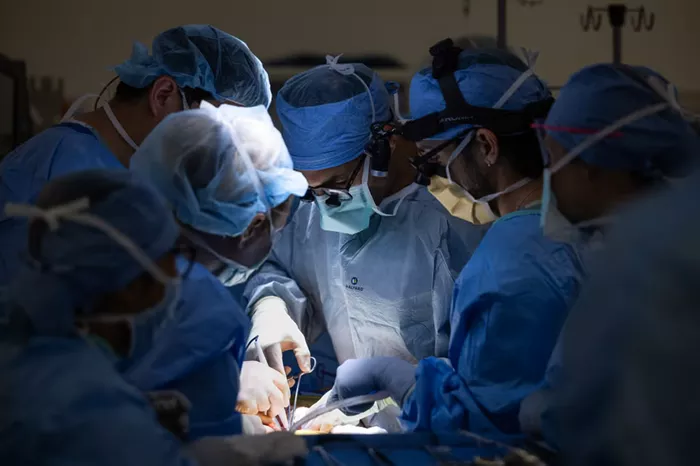
Last May, Drs. Nassiri and Gill spent seven hours harvesting the donor bladder and eight hours performing the transplant on Larrainzar. First, they connected the donor kidney to his blood vessels. “Sometimes kidneys take up to a week to function, but his pinked up beautifully immediately,” says Dr. Nassiri.
Next, they attached the bladder to two major blood vessels and the remaining tissue of Larrainzar’s original bladder. Weeks later, a wound infection required additional surgery, and he experienced rare antibiotic-induced muscle pain. By the third month, however, he was using the bathroom normally and had lost 30 pounds.
“What’s most impressive is that he has great sensation,” says Dr. Nassiri. “He can feel when his bladder is full and store nearly a third of a liter, which is normal.”
Larrainzar reports more energy and has returned to work. “Not being connected to a machine every night makes a huge difference,” he says.
Doctors say the transplant could extend his life. For patients on dialysis, the average life expectancy is five to ten years. Larrainzar was already in his seventh year of dialysis, with failing treatment options. Now, thanks to this groundbreaking surgery, he has a new lease on life.
Related topic:
