
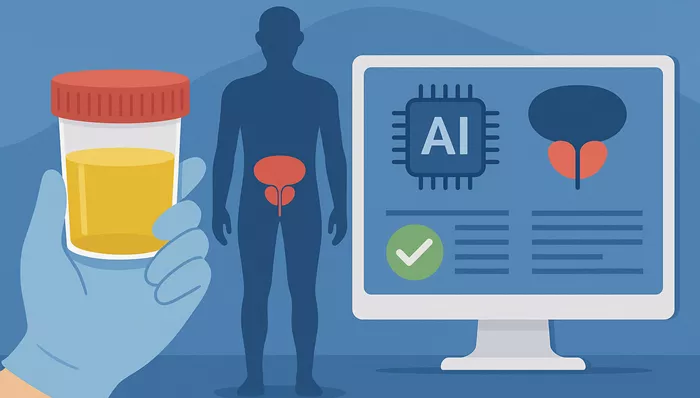
A groundbreaking new test for prostate cancer promises to detect the disease with unprecedented accuracy—up to 99 percent.
The test, described as “truly game-changing,” can detect more than 100 biological markers of prostate cancer, including specific proteins and genes. An AI algorithm analyses these markers to determine not only whether cancer is present, but also whether it is slow-growing or aggressive.
Prostate cancer is the most common cancer among men in England. About one in eight men will be diagnosed during their lifetime, with over 50,000 new cases each year in the UK. Currently, there is no routine screening for healthy men because the PSA test, used only when symptoms appear or on request, is not sufficiently accurate.
This new test uses blood and urine samples to identify more than 100 markers linked to prostate cancer. Based on previous studies, scientists expect its accuracy to be between 96 and 99 percent.
Developed by the EDX Medical Group at Cambridge Science Park, the test is expected to receive regulatory approval and launch later this year or in early 2026.
Professor Sir Chris Evans, founder and chief scientific officer of EDX Medical, said: “We have been studying this area for 18 months and are tremendously excited. Incorporating all these biomarkers into routine screening could revolutionize prostate cancer management by enabling earlier detection and more accurate risk prediction.”
The test has been welcomed by former Olympic cycling champion Sir Chris Hoy, who was diagnosed with terminal prostate cancer in 2023. He said: “I now know there is a need for better and more accurate prostate cancer screening tests, and I wholeheartedly welcome this initiative.”
Health minister Andrew Gwynne confirmed that the government is “looking carefully” at introducing routine screening for prostate cancer as technology advances.
Simon Grieveson, assistant director of research at Prostate Cancer UK, said: “Emerging tests like this show great promise for early detection. Accurate diagnosis could prevent up to 40 percent of prostate cancer deaths—saving thousands of lives each year. However, these tests still need rigorous clinical trials before we can fully evaluate their usefulness.”
Related topics
Neuro Symptoms Often Appear Before Testicular Cancer Diagnosis
Testicular Cancer: Key Signs and How to Check Yourself Safely
Bladder Cancer Treatment Insights from Type 1 Diabetes Risk Research
