
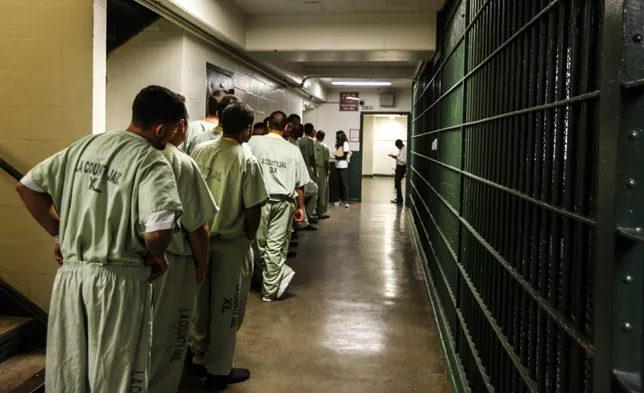
For the last 10 months of his life, Fernando Clark waited in an Alabama jail cell for court-ordered psychiatric treatment. He had been arrested for stealing cigarettes and fruit from a gas station. He died before ever receiving care.
Clark was one of hundreds of people in Alabama stuck on a long waitlist for placement in the state’s limited psychiatric facilities. A court-ordered consent decree requires Alabama to reduce treatment delays for defendants found too mentally ill to stand trial. Instead, the problem has grown worse. Court records released in September show the waitlist for the state’s only secure psychiatric hospital is now nearly five times longer than when the decree was issued.
Experts say Alabama is not alone. Similar backlogs are growing across the United States.
A National Crisis
Across the country, state psychiatric hospital beds for adults with severe mental illnesses hit a historic low in 2023, with only 36,150 beds available. More than half were filled by people committed through the criminal legal system, according to the Treatment Advocacy Center. The number of beds has dropped 17% since 2017.
“This is happening everywhere,” said Lisa Dailey, the center’s executive director. She noted that courts are getting better at recognizing when mental illness contributes to a person’s arrest or criminal charges. But the system built to treat those individuals has not kept up. Both bed space and staffing levels in secure treatment facilities remain far below demand.
Alabama Tries to Respond
Alabama is expanding its only secure psychiatric facility for men. The center currently has 140 beds and serves slightly over 200 people. Construction is underway to add 80 more beds, but officials say staffing shortages may prevent the new units from operating.
To address this, the state increased average pay by about $6 an hour in 2024. Mental health officials say it has helped with hiring and retention. Judges involved in enforcing the consent decree are also working with the state to speed up evaluation and treatment times.
The Department of Mental Health declined to comment, citing ongoing litigation.
The state has also trained 94 people to run jail-based competency restoration programs, aiming to reduce pressure on the secure hospital. These programs now exist in five counties and will expand to three more.
In addition, Alabama spent $175 million over five years to create six crisis centers with 180 beds. These centers are meant to offer immediate help for people experiencing a mental health emergency. They conducted more than 22,000 evaluations last year.
A Death That Came Too Late
None of these changes helped Clark. After an evaluation found he could not be restored to competency, a judge ordered treatment at a community mental health center. Those centers, too, had long waits.
Clark’s sisters said he often wandered miles from home, confused and vulnerable. They tried to keep him safe and get him help, but resources were scarce. He disappeared again in 2023 while facing a burglary charge from 2022. Police eventually found him, and he was jailed in February 2024.
In September, officials again determined his mental illness was untreatable. He was ordered to remain in jail until a bed opened.
On Dec. 11, Clark was found unresponsive in his cell. Repairs to the building’s boiler had pushed the temperature inside to 110 degrees Fahrenheit. His autopsy listed congestive heart failure as the cause of death.
Forensic pathologist Tom Andrew reviewed the autopsy and questioned why it did not note Clark’s internal temperature or rule out dehydration. He also noted that Clark had been given antipsychotic medication that can interfere with the body’s ability to regulate heat.
Clark, known as “Pooch” to his family, earned the nickname as a child because he was small and gentle.
His death, experts say, is a stark reminder of the deadly consequences of a national system that fails people with severe mental illness—especially those who end up behind bars.
Related topics
