
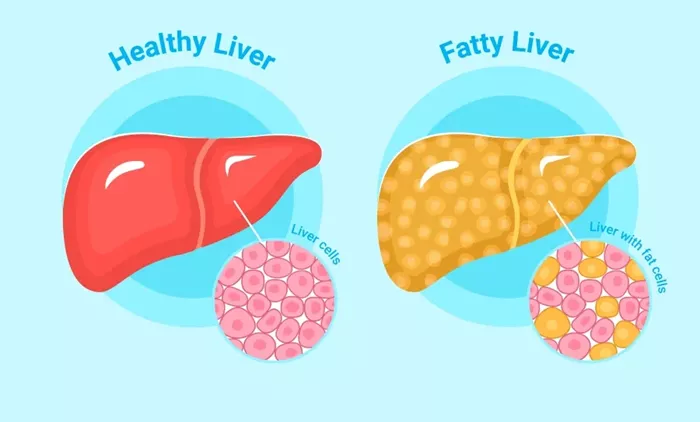
Sheila Gardineer, a resident of Naples, Florida, is among millions in the United States living with nonalcoholic fatty liver disease (NAFLD). The condition, which claimed the life of her father, has long been a silent threat due to its subtle progression. For Gardineer, the journey has been both personal and transformative.
“I started feeling like I have swollen inside my rib cage, like somebody had their fist inside my belly and was trying to push my insides out from the inside out through my rib cage,” Gardineer described. Her father’s NAFLD eventually progressed to liver cancer, highlighting the urgent need for effective interventions.
Early Detection Is Critical
Dr. Raymond Phillips, also from Naples, emphasized the importance of early detection. Once symptoms manifest, treatment options are limited, and liver transplantation often becomes the only recourse.
“When you’re starting to have symptoms, it is too late to do any kind of treatment. At that point, the only option is liver transplantation,” Dr. Phillips explained. He notes that the disease often remains undetected until significant liver damage has occurred.
Emerging Treatments Offer New Hope
Gardineer discovered hope through recent medical advancements. Diagnosed with type 2 diabetes in early 2024, she began treatment with Mounjaro, a GLP-1 receptor agonist. The medication facilitated significant weight loss and improved liver health by reducing fibrosis associated with NAFLD.
“I had a significant weight loss, so I’m not sure if it was the Mounjaro being a GLP-1 medication or the weight loss, but either way it lessened the fibrosis of the liver that’s caused by the liver disease,” she said.
Since then, the FDA has approved Zepbound, another GLP-1 medication, specifically for treating fatty liver disease, signaling broader opportunities for patients.
Prevalence and Public Health Concerns
Dr. Phillips highlighted the widespread impact of NAFLD-related cirrhosis in the United States, estimating that 10 million people may have undiagnosed cirrhosis. Florida Health Department data show that approximately 32% of Gulf Coast residents are affected.
“It’s a slow-motion iceberg coming at you. When you realize no one’s changing course, you have to take action,” Dr. Phillips warned. Routine annual physicals can detect the disease before severe complications arise.
Clinical Trials and Next Directions
Dr. Phillips has been conducting clinical trials with 50 local patients, testing combinations of GLP-1 medications to improve effectiveness and affordability. He compares the results of these therapies to the dramatic outcomes achieved through bariatric surgery.
“It’s becoming clear that you may need to use a combination of a couple of medications to effectively reduce fat and roll back scar tissue accumulated within the liver,” he said.
Gardineer has actively participated in these trials, witnessing improvements in her liver function and supporting ongoing research.
“God bless the researchers who are truly in it to help people. They’re not in it to make big bucks—they genuinely want to improve lives,” she reflected.
With new medications and ongoing clinical research, patients like Gardineer now have renewed hope against a disease once considered untreatable.
Related topics
