
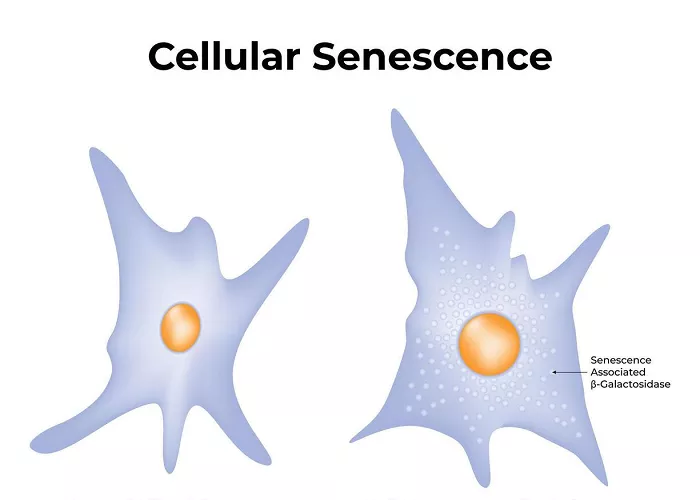
A comprehensive review published in the Journal of Internal Medicinereveals compelling evidence that cellular senescence – the process where cells age and permanently stop dividing – plays a crucial role in metabolic dysfunction underlying obesity, type 2 diabetes, and metabolic syndrome.
The analysis synthesizes current research linking senescent cells to metabolic disorders and highlights the therapeutic potential of “senotherapeutic” approaches that target these aging cells. This emerging understanding represents a paradigm shift in how we approach metabolic disease treatment.
Mechanisms of Senescent Cell Accumulation
The review details how senescent cells accumulate in metabolic tissues including adipose tissue, liver, and pancreas, particularly under conditions of nutrient excess and metabolic stress.
These cells enter a state of growth arrest but remain metabolically active, secreting various factors that disrupt normal tissue function. The accumulation process accelerates with aging, chronic inflammation, and metabolic overload, creating a vicious cycle that exacerbates tissue dysfunction.
Senescence-Associated Secretory Phenotype (SASP)
A key focus of the review is the senescence-associated secretory phenotype (SASP), through which senescent cells release pro-inflammatory cytokines, chemokines, and matrix-remodeling proteins.
These SASP factors promote local and systemic inflammation and fibrosis (tissue scarring), ultimately impairing insulin sensitivity, disrupting energy homeostasis, and contributing to the pathogenesis of metabolic diseases. The persistent low-grade inflammation driven by SASP is now recognized as a fundamental mechanism linking cellular aging to metabolic dysfunction.
Senotherapeutic Intervention Strategies
The authors describe three advanced therapeutic approaches targeting senescent cells:
- Senolytics: Drugs that selectively eliminate senescent cells (e.g., dasatinib plus quercetin, fisetin)
- Senomorphics: Compounds that suppress the SASP without killing senescent cells
- Senosensitizers: Agents that make senescent cells more vulnerable to clearance
These interventions have shown promise in preclinical models for improving metabolic parameters and reducing tissue inflammation and fibrosis.
Clinical Implications and Future Directions
The review emphasizes that senotherapeutic strategies could potentially break the cycle of metabolic dysfunction by targeting its cellular origins. Early human trials have demonstrated improved physical function and reduced senescence biomarkers, with ongoing studies exploring their efficacy specifically for metabolic diseases.
The authors note that combining senotherapies with existing metabolic treatments may yield synergistic benefits, potentially addressing multiple aspects of disease pathophysiology simultaneously.
Research Gaps and Translation Challenges
While the evidence is promising, the review identifies several challenges including optimizing drug delivery to specific tissues, understanding long-term effects of senescent cell clearance, and identifying patient populations most likely to benefit.
The authors call for more clinical trials to establish efficacy, safety, and optimal treatment protocols for using senotherapies in metabolic disease management.
Related topics:
