
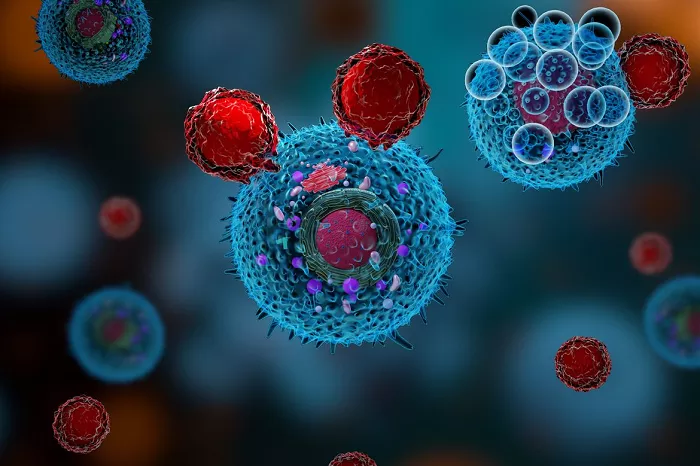
A groundbreaking study from the University of Innsbruck’s Institute of Zoology, published in Developmental Cell, has uncovered the molecular mechanism by which temperature regulates immune cell movement.
The research reveals that the motor protein myosin II serves as a key regulator of immune cells’ temperature sensitivity, driving accelerated immune responses when body temperature rises. This discovery provides the first detailed understanding of how fever enhances immune function at the single-cell level, offering new insights into one of evolution’s most conserved defense mechanisms.
A Decade-Long Scientific Journey
The investigation began nearly a decade ago with simple cell culture experiments at the Institute of Science and Technology Austria (ISTA), where researcher Stefan Wieser first observed that temperature significantly affected immune cell motility.
“I noticed that gradually increasing incubator temperature from 20°C to 40°C dramatically changed how immune cells moved – the warmer the environment, the faster they traveled, while at 20°C they nearly stopped completely,” Wieser recalled. However, unraveling the molecular mechanism behind this phenomenon required years of additional research and technological development.
Advanced Methodology and Live Imaging
During his tenure as group leader at the Institute of Photonic Sciences (ICFO) in Barcelona, Wieser finally gained access to customized thermal microscopy systems that enabled systematic investigation of immune cell temperature sensitivity.
The team combined cell culture studies with live imaging in zebrafish and mouse models, allowing them to observe real-time cellular responses to temperature changes. These sophisticated approaches formed the basis for the findings now published in the latest issue of Developmental Cell.
Immediate Temperature Effects on Immune Cells
The research demonstrated that various human white blood cells – including T cells, macrophages, dendritic cells, and neutrophils – showed significantly increased migration speeds when temperature rose from 25°C (“cold”) to 37°C (“normal”) and 41°C (“fever”).
Additionally, the number of cells entering lymphatic vessels within short timeframes substantially increased at higher temperatures. Most remarkably, leukocytes responded to temperature changes within seconds. “This clearly indicates a biophysical mechanism operating much faster than any gene regulatory process,” Wieser emphasized.
Myosin II: The Key Molecular Player
Using complex fluorescence microscopy setups that enabled precise temperature control at the single-cell level, the researchers identified myosin II as the central mechanism. This motor protein, known for its roles in cell movement, division
and muscle contraction, enhances its ability to generate mechanical force through ATP when temperatures rise above 37°C. Essentially, myosin II acts as a molecular “engine” that pushes immune cells forward more rapidly under fever conditions, making it a crucial driver of effective immune responses.
Scientific Implications and Future Directions
“Our study shows that temperature is a key physiological control parameter that can autonomously regulate speed and morphodynamics at the single-cell level in both warm-blooded and cold-blooded species,” Wieser summarized. He views these findings as a starting point for new research questions, particularly in physiology and immunology.
Future investigations will explore species-specific differences in temperature sensitivity and potential applications for optimizing immunotherapies. The research opens new possibilities for developing treatments that harness the body’s natural temperature regulation mechanisms to enhance immune function.
Related topics
