The SNAP program, a cornerstone of household hunger protections, has entered a precarious phase as talks over funding collide with court rulings, misinformation and political blame. After weeks of warnings that federal food assistance could lapse, benefits were briefly salvaged on Monday. Yet the relief is fragile, and the disruption is already reshaping a program many households rely on with steady expectations.
On Monday, the Trump administration agreed to partially fund the Supplemental Nutrition Assistance Program, commonly known as food stamps. In a court filing, officials said they would use $4.65 billion in contingency funds to cover about half of eligible households’ benefits for the current month. Beyond that, however, many beneficiaries face a real possibility of running dry.
For SNAP recipients, this marks the first time the program could operate with gaps in benefits during a government shutdown. Renewal funds were due to renew on Saturday, leaving many people waiting without money they counted on. It remains unclear how quickly electronic benefits cards will be reloaded; loading funds can take states a week or more, and exact benefit amounts for households have not been finalized.
The prospect of losing grocery money has stoked fear across the nation. People lined up at food banks, rationing whatever remained in their pantries. State leaders scrambled to find emergency funds to bridge the gaps, while misinformation spread online, sometimes fueled by racialized tropes and fake videos.
Until Monday, the Department of Agriculture had argued that contingency funds could not legally sustain SNAP during a shutdown. A federal judge in Rhode Island, however, ordered the administration to release at least partial funding for SNAP, shaping the immediate actions that followed.
Nearly 42 million Americans rely on SNAP, and about four in five of these households include a child, an older adult, or a person with a disability. Benefit issuance occurs at different times each month, so not all recipients have faced a shortfall yet. But the looming hunger risk has prompted emergency declarations from at least nine governors. States have mobilized resources: California, Iowa, Nevada and West Virginia have prepared National Guard support for food distribution, and roughly 30 states have allocated funds to food banks or to supplement SNAP losses.
Political fault lines have sharpened. Democrats accuse Republicans of letting the program run dry, while Republicans say action by Democrats is needed to address broader issues, including health care premiums that will rise later this year. As discussions continue, states and communities are improvising to keep people fed.
In parallel, lawsuits filed by Democratic leaders in 25 states challenge the Department of Agriculture’s handling of SNAP funding amid the shutdown. Critics say the administration’s approach is cruel and deliberate in its timing, especially as families fear losing access to essentials.
Public attention has also turned to a high-profile White House event that occurred on the eve of SNAP disruptions. Critics viewed the Halloween gathering at Mar-a-Lago as tone-deaf given the hardship facing millions of Americans. The White House described the event as a display of celebration, while opponents pointed to the broader context of hunger and instability.
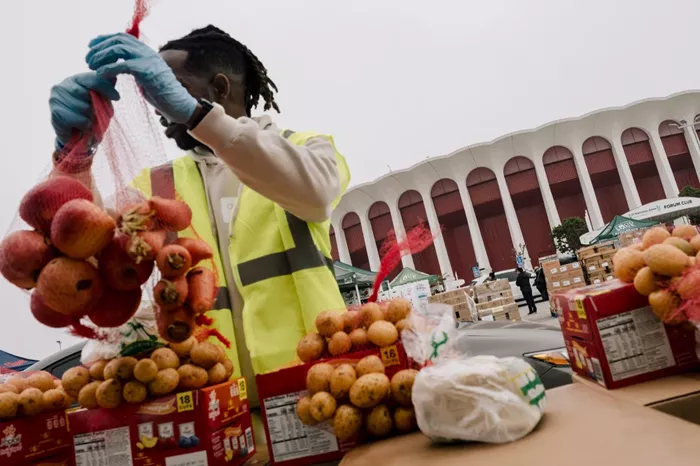
Community responses have been notable. Dozens of organizations and businesses stepped in to help: a delivery service pledged to bring one million meals to food banks; a Chicago deli offered free meals to SNAP recipients presenting their card; and a church in Connecticut hosted a pop-up pantry. Volunteers continued to organize donated staples, beans and other essentials to help families weather the delays and shortfalls.
Misinformation has complicated the situation. Some social-media videos and posts have circulated with distorted portrayals of SNAP recipients, and a widely shared chart mischaracterized the racial makeup of beneficiaries. In truth, data from the USDA show SNAP recipients are diverse, with white individuals representing roughly 35 percent, African American about 26 percent, and Hispanic under 16 percent.
Facing uncertainty, many recipients are adjusting daily routines. A 60-year-old West Virginia resident described hours-long lines at a pantry, while a Wisconsin preschool teacher prepared for potential reductions in meals for her students. A disabled father spoke of selling a television to fund groceries. For some, resilience means cooking with leftovers and freezing meals in anticipation of further delays.
Experts emphasize that the core issue remains the sufficiency and reliability of funding. Even with partial relief, many families will exhaust benefits before month’s end. The broader question now is whether a sustainable, bipartisan resolution can restore confidence in a program that serves as a lifeline for millions of Americans.
Related topics
- FDA Warns of Serious Risks From Radiofrequency Microneedling
- The New FDA Stance Narrows Use of Fluoride Tablets for Children
- Blood Pressure Medication Recall Linked to Cancer Risk