
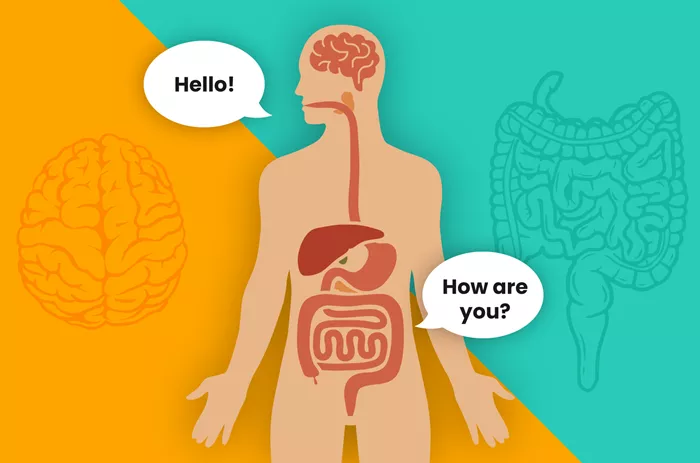
A new study finds the gut’s rhythmic contractions may help explain how brain blood vessels coordinate. The research, led by scientists at the University of California, San Diego, shows that the intestine’s wave-like muscle movements could inform how arterioles in the brain dilate and constrict in sync.
Key findings
When brain neurons activate, tiny brain vessels called arterioles expand to supply more oxygen and nutrients. These vessels often pulse in harmony.
The UC San Diego team examined the gut, where intestinal movements naturally travel in waves. They found a pattern of synchronized oscillations that form a staircase-like progression.
The researchers propose that the same pattern could underlie the coordinated activity of brain vessels, linking gut rhythms to brain blood flow.
Expert insights
Massimo Vergassola, a UC San Diego physics professor, explained that coupled oscillators in the gut and brain interact similarly, even though their frequencies vary. This variation mirrors real biological systems.
David Kleinfeld, another UC San Diego professor, noted that the mathematics describing these rhythms now captures the behavior at transition points, not just the overall pattern. He called this a critical advance.
Implications and next steps
The work could enhance understanding of how brain function remains synchronized and how digestive issues might disrupt the movement of food, liquids, and waste through the gastrointestinal tract.
Researchers emphasize that while the brain is far more complex than the gut, studying these rhythms illuminates broader mechanisms of coordination in the body.
Related topics
