
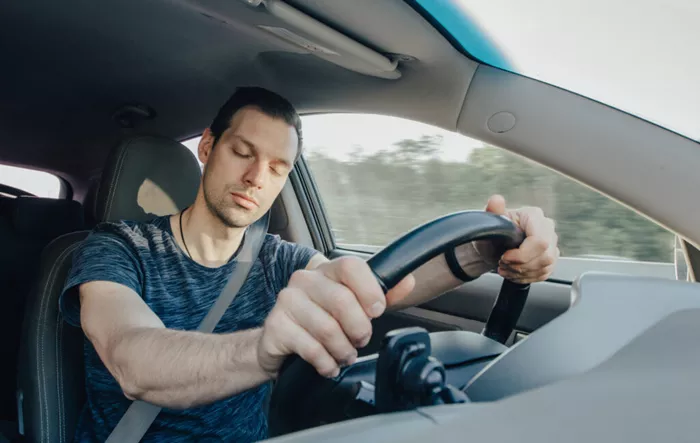
Nearly half of American adults admit they have driven while so tired that it affected their ability to operate a vehicle safely, according to new research by the American Academy of Sleep Medicine (AASM). The findings reveal a growing public health concern — one that experts say is just as dangerous as driving under the influence of alcohol.
In the AASM’s nationwide survey, 41% of adults confessed to driving while drowsy enough to impair their performance. The breakdown shows a clear gender divide: 50% of men reported experiencing dangerously low alertness while driving, compared with 33% of women. These numbers suggest that fatigue behind the wheel may be far more common — and more hazardous — than most drivers realize.
Drowsy Driving: As Dangerous as Alcohol
“Drowsy driving is a serious health and safety risk, and like drunk driving, it is completely avoidable,” said Dr. Andrea Matsumura, a sleep medicine physician and spokesperson for AASM. The physiological effects of severe sleep deprivation can mirror those of alcohol intoxication. Studies have shown that being awake for 18 hours can impair coordination, reaction time, and judgment to the same degree as a blood alcohol concentration (BAC) of 0.05%. After 24 hours without sleep, that impairment rises to the equivalent of a BAC of 0.10%, above the legal limit in most states.
According to the AAA Foundation for Traffic Safety, approximately one in six fatal traffic accidents involves a drowsy driver. Adults aged 35 to 44 were identified as the group most likely to report struggling to stay awake behind the wheel, with 47% admitting to such experiences. These statistics highlight a troubling overlap between peak working years and the pressures of modern life — both of which can lead to chronic sleep deprivation.
The Physiology of Fatigue and Driving Performance
Sleep deprivation affects several areas of brain function critical for safe driving. Lack of rest slows reaction times, diminishes attention, and weakens decision-making abilities. Microsleeps — brief, involuntary lapses in consciousness lasting only seconds — can occur without warning, even when a person’s eyes are open. At highway speeds, a vehicle can travel the length of a football field during one such lapse.
Moreover, fatigue undermines emotional control and situational awareness, increasing the likelihood of risk-taking and delayed braking. The result is a perfect storm of conditions that mimic intoxication — only without the same social stigma or widespread prevention measures.
Recognizing the Warning Signs
Dr. Matsumura emphasizes that recognizing early warning signs of fatigue can prevent tragedy. Common indicators of drowsy driving include:
- Difficulty keeping eyes open or maintaining focus
- Drifting between lanes or onto the shoulder
- Missing exits, turns, or traffic signals
- Following other vehicles too closely
- Brief “nodding off” episodes or memory gaps
“If you catch yourself drifting into another lane or nodding off, it’s absolutely time to pull over and get off the road,” Matsumura said. “No destination is worth your life — or someone else’s.”
Prevention: The Power of Rest and Planning
Experts agree that the most effective defense against drowsy driving is simple but often overlooked: get enough sleep. The AASM recommends that adults aim for at least seven hours of sleep each night to maintain cognitive function and alertness.
In addition to adequate rest, the AASM advises several practical strategies to reduce fatigue-related risks:
- Avoid late-night or solo driving whenever possible.
- Share driving duties on long road trips to minimize fatigue.
- Take breaks every two hours or 100 miles, even if you don’t feel tired.
- Pull over safely and nap if you start to feel drowsy.
- Arrange alternative transportation after overnight shifts or extended work hours.
These measures, experts stress, can mean the difference between arriving safely and a preventable tragedy.
A Call for Awareness and Cultural Change
Public health advocates are urging a shift in how society views sleep — from a luxury to a biological necessity. The glorification of exhaustion as a sign of productivity has, in many ways, normalized fatigue behind the wheel. But as data continues to show, the consequences are deadly.
“Driving while sleep-deprived isn’t a sign of toughness or dedication,” Matsumura noted. “It’s a sign of danger. Sleep should be treated with the same respect we give to seatbelts, speed limits, and sobriety.”
As the evidence mounts, experts hope that recognizing fatigue as an impairment will lead to stronger public education campaigns and potentially, future policy changes — including stricter monitoring of drowsy driving incidents.
In summary: Drowsy driving remains one of the most underrecognized but preventable causes of road fatalities in the United States. With nearly half of adults admitting to driving while too tired to focus, experts emphasize that getting sufficient rest is not merely a matter of personal well-being — it is a matter of public safety.
Related topics
