
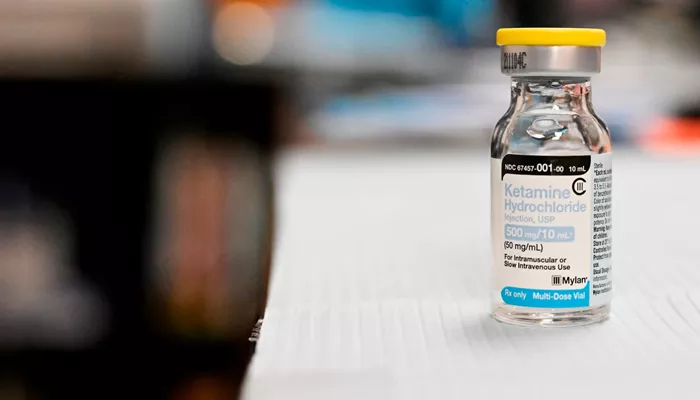
Repeated ketamine infusions offered no extra advantage when added to standard inpatient care for depression, according to a randomized, blinded clinical trial. The KARMA-Dep (2) Trial, published in JAMA Psychiatry on October 22, 2025, involved researchers from St Patrick’s Mental Health Services, Trinity College Dublin, and Queens University Belfast, Ireland. The study was led by Declan McLoughlin, Research Professor of Psychiatry at Trinity College Dublin and Consultant Psychiatrist at St Patrick’s Mental Health Services.
Background and Rationale
Depression is a leading cause of disability globally, with significant hospital admissions for depressive disorders in Ireland. While many patients respond to conventional antidepressants, about 30% experience insufficient improvement. Ketamine, administered intravenously in sub-anaesthetic doses, targets the brain’s glutamate system and has shown rapid but often short-lived antidepressant effects. Off-label use of ketamine for depression has increased, prompting questions about the potential benefits of repeated infusions in a controlled hospital setting.
Trial Design and Methods
KARMA-Dep 2 was investigator-led and funded by the Health Research Board. Participants admitted for depression were randomized to receive up to eight infusions of either ketamine or midazolam (an active psychoactive comparator) over four weeks, in addition to standard inpatient care. The trial aimed to assess antidepressant efficacy, safety, cost-effectiveness, and quality of life during treatment and during follow-up up to six months.
Primary and Secondary Outcomes
The primary outcome used was the Montgomery-Åsberg Depression Rating Scale (MADRS), an objective measure of depression severity. Secondary outcomes included a patient-rated measure, the Quick Inventory of Depressive Symptoms, Self-Report scale (QIDS-SR-16), as well as cognitive, economic, and quality-of-life assessments.
Key Findings
- There was no significant difference between ketamine and midazolam groups on the primary outcome (MADRS) at the end of the treatment course.
- There was no significant difference on the subjective, patient-rated QIDS-SR-16 measure at the end of treatment.
- No meaningful differences were found in secondary outcomes, including cognitive performance, economic impact, or overall quality of life.
- Blinding was not fully successful; most participants and raters correctly guessed treatment allocation, which could have amplified placebo effects.
Interpretation from Lead Researchers
Declan McLoughlin commented that the trial did not confirm the hypothesis that repeated ketamine infusions would improve mood outcomes beyond standard inpatient care. He noted that, under rigorous clinical conditions, adjunctive ketamine did not provide added benefit during the initial treatment phase or the six-month follow-up, suggesting previous estimates of ketamine’s efficacy may have been overstated.
Dr Ana Jelovac emphasized the importance of reporting blinding success in trials of therapies with conspicuous subjective effects, such as ketamine. She highlighted that imperfect blinding can lead to inflated perceived treatment effects due to placebo responses.
Context and Implications
These findings suggest that for hospitalized patients with depression, routine addition of repeated intravenous ketamine infusions to standard care may not enhance clinical outcomes compared with a psychoactive control. Clinicians should reinterpret expectations for repeated ketamine in inpatient settings and consider patient selection, dosing strategies, and alternative therapeutic options. The results also underscore the necessity for robust blinding and appropriate control conditions in trials involving dissociative or psychedelic-like interventions.
What Comes Next
Further research is needed to identify subgroups that might benefit from ketamine, optimal dosing regimens, and long-term safety profiles. Comparative trials with other rapid-acting antidepressants and real-world effectiveness studies could help clarify ketamine’s role in depression treatment pipelines, particularly for those with treatment-resistant illness.
Related topics
