
ge-related macular degeneration (AMD), particularly in its advanced geographic atrophy form, is a leading cause of blindness affecting millions globally. This irreversible disease deteriorates the macula—the retina’s central part responsible for sharp, detailed, and colored vision—leading to the loss of central vision. Until recently, no treatment offered vision restoration for patients at this advanced stage.
A new study published in the New England Journal of Medicine introduces a promising breakthrough: a tiny wireless chip implanted in the eye paired with specialized augmented reality glasses, enabling some legally blind patients to regain reading ability. The clinical trial involved 38 European patients with advanced dry AMD.
How the PRIMA Device Works
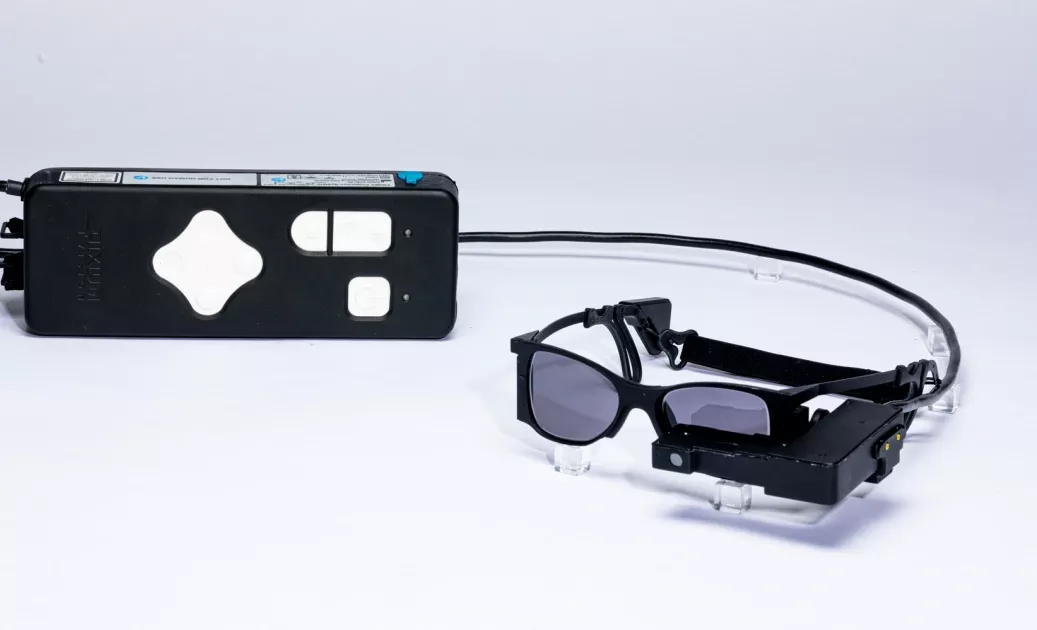
Participants wore augmented reality glasses equipped with a camera capturing their visual field. The camera transmits images as infrared light to the implanted microchip behind the retina. This chip converts the light signals into electrical impulses stimulating the remaining healthy cells in the macula. These impulses are then interpreted by the brain as vision.
Patients carry an image processor to enhance images, allowing zooming and magnification. Although the images perceived appear in black and white, the device enables patients to identify objects and read text again, which was otherwise impossible in the geographic atrophy stage of AMD.
Study Results and Patient Outcomes
One year post-implantation, 80% of patients reassessed showed significant visual improvements. Despite surgical risks—including eye blood pressure spikes and retinal bleeding—most adverse events resolved within two months.
Sheila Irvine, a 70-year-old patient, described her vision before implantation as “two black discs” blocking sight, leaving her unable to read. Post-implantation, she returned to enjoying reading and doing crosswords, reflecting improved quality of life.
Dr. Frank Holz, lead investigator from the University Hospital of Bonn, emphasized that this is the first therapeutic approach to restore visual function in late-stage AMD patients, a dramatic shift in treatment prospects.
Expert Perspectives and Limitations
Ophthalmologists not involved in the trial caution that the PRIMA system is not a cure. Dr. Sunir Garg from Wills Eye Hospital noted current therapies only slow AMD progression without restoring lost vision. Dr. Demetrios Vavvas of Mass Eye and Ear highlighted the surgery’s complexity and risks: the retina must be lifted to implant the chip, potentially worsening atrophy.
Moreover, the device restores only black-and-white vision, differing significantly from natural sight. Patients require intensive training to interpret the new visual input. Although improvements in specific tasks are evident, the overall impact on daily life remains under evaluation.
Future Developments and Research
The device’s technology is evolving rapidly. Invented by Stanford’s Dr. Daniel Palanker and developed by Science Corp, the chip’s pixel resolution is planned to increase dramatically, potentially enabling 20/20 vision. Upcoming software updates aim to deliver gray-scale images for more natural visual experiences.
There is also interest in testing the device in other retinal conditions like Stargardt disease, which shares features with AMD but affects younger patients.
Larger trials with control groups are necessary to confirm real-world benefits, such as regained independence in everyday activities like reading bills or grocery labels. Long-term studies will assess the durability of visual improvements and identify any delayed complications.
A Step Forward in Vision Restoration
While not a panacea, this implant and augmented reality system represent a significant advance in managing severe visual impairment due to AMD. The approach of leveraging brain-computer interface technology may open new avenues for restoring sight among those with currently untreatable retinal diseases. Continued research and device refinement hold promise for expanding vision restoration options in the near future.
Related topics
