
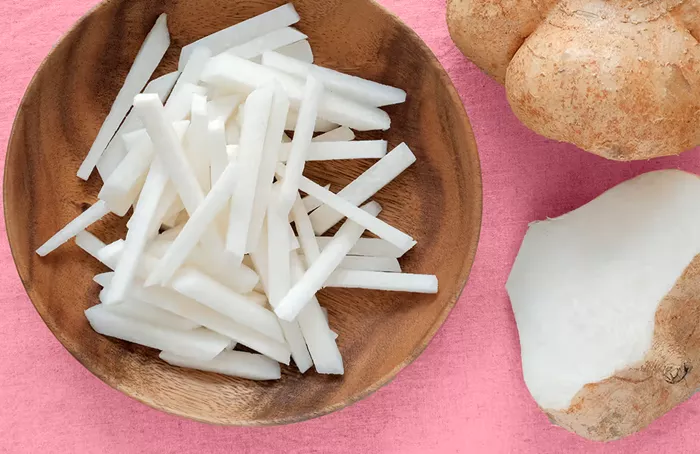
Jicama is a root vegetable characterized by its thick brown skin and crisp white flesh offering a flavor profile similar to apples but with less sweetness. Botanically known as Pachyrhizus erosus this tuber grows on long vines primarily cultivated in Mexico and Central America.
While the plant produces sprawling vines similar to other legumes the edible portion is the large tuberous root that develops underground. The vegetable typically weighs 1-5 pounds when harvested commercially though it can grow significantly larger under optimal conditions. Its unique texture and mild sweetness make it a versatile ingredient in both raw and cooked preparations.
Exploring the Nutritional Profile and Health Benefits
A medium-sized jicama root contains approximately 250 calories with 58 grams of carbohydrates including an impressive 32 grams of dietary fiber. It provides substantial amounts of vitamin C meeting 15-19% of daily requirements along with meaningful quantities of potassium and vitamin B6.
The high fiber content particularly inulin fiber acts as a prebiotic supporting digestive health and gut microbiome balance. Jicama’s low glycemic index makes it suitable for blood sugar management while its antioxidant compounds help combat oxidative stress. Regular consumption may contribute to improved cholesterol levels enhanced immune function and reduced inflammation throughout the body.
Identifying Proper Selection and Storage Methods
When selecting jicama choose roots that feel heavy for their size with firm smooth skin free from soft spots or blemishes. Smaller roots typically offer better texture and sweetness compared to larger specimens which can become woody or starchy.
Store unpeeled jicama in a cool dark place with good air circulation where it will keep for 2-3 weeks. Once cut tightly wrap the remaining portion in plastic wrap and refrigerate for up to one week. The vegetable’s natural protective skin helps maintain freshness though damaged areas should be trimmed to prevent spoilage.
Preparing Jicama Safely with Proper Techniques
Always peel jicama thoroughly before consumption as the skin and other plant parts contain toxic compounds called rotenone. Use a sharp vegetable peeler or knife to remove both the outer skin and the fibrous layer immediately beneath it. Cut the vegetable into manageable sections then slice dice or shred according to your recipe requirements.
For raw applications immediately submerge cut pieces in acidulated water to maintain crispness and prevent discoloration though jicama naturally oxidizes slower than many other fruits and vegetables.
Incorporating Jicama into Various Culinary Applications
Jicama’s crisp texture and neutral flavor make it exceptionally versatile in the kitchen. Enjoy it raw as a snack with lime juice and chili powder or incorporate it into salads for added crunch. It can be julienned for slaws cubed for salsas or sliced for crudité platters.
When cooked jicama maintains its structure well making it suitable for stir-fries soups and stews where it absorbs surrounding flavors while contributing textural interest. Experiment with roasting or baking as alternative cooking methods that bring out its natural sweetness.
Understanding Potential Risks and Special Considerations
While jicama flesh is perfectly safe to eat the plant’s seeds leaves and stems contain toxic compounds that can cause serious health issues if ingested. Some individuals may experience allergic reactions particularly those sensitive to other legumes. Symptoms might include oral itching skin rashes or digestive discomfort.
As with any high-fiber food introduce jicama gradually into your diet to allow your digestive system to adjust. The vegetable’s high water content makes it generally easy to digest but excessive consumption may cause temporary bloating or gas in sensitive individuals.
Related topics
