
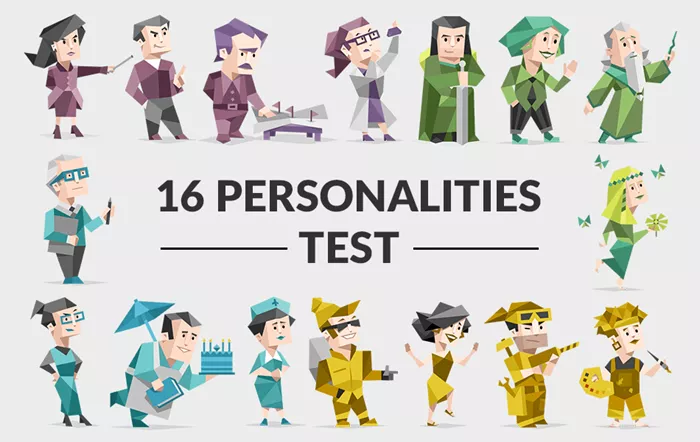
Many jobseekers give little thought to whether their personality might better guide their career direction. But a new analysis from a résumé-advice platform suggests that knowing your Myers-Briggs (MBTI) personality type could help you identify roles that pay well and suit your natural strengths.
The Myers-Briggs framework divides personality into four preference pairs: Extraversion (E) versus Introversion (I), Sensing (S) versus Intuition (N), Thinking (T) versus Feeling (F), and Judging (J) versus Perceiving (P). Anyone is classified into one of 16 combinations—such as ISTJ, ENFP, or ENTJ—each of which reflects a distinct style of working, decision-making, and relating to the world.
Using U.S. labor data from the Bureau of Labor Statistics combined with crowd-sourced survey results, Resume Genius identified which high-paying job roles most closely align with each MBTI type. They started by gathering user votes from a personality forum to generate the top five job recommendations per type, then ranked these by median salary to pick the highest paying fit for each.
Here is a sample of notable matches from their list:
- ISTJ (“Logistician”) → Surgeon: Median wage roughly $239,200
- INFJ (“Advocate”) → Psychiatrist: ~$226,880
- ESTJ (“Executive”) → Airline Captain: ~$198,100
- INTP (“Logician”) → Physicist: ~$166,290
- ENFP (“Campaigner”) → Advertising Director: ~$159,660
- ENTJ (“Commander”) → Prosecutor: ~$151,160
- ENFJ (“Protagonist”) → HR Manager: ~$140,030
- ESTP (“Entrepreneur”) → Sales Manager: ~$138,060
- ISFJ (“Defender”) → Pharmacist: ~$137,480
- ISTP (“Virtuoso”) → Electrical Engineer: ~$118,780
- INTJ (“Architect”) → Data Scientist: ~$112,590
- INFP (“Mediator”) → Animator: ~$99,800
- ENTP (“Debater”) → Forensic Psychologist: ~$94,310
- ESFP (“Entertainer”) → Model: ~$89,990
- ESFJ (“Consul”) → Postsecondary Teacher: ~$83,980
- ISFP (“Adventurer”) → Fashion Designer: ~$80,690
According to the report, each “best-fit” job not only offers a relatively high income but is framed as naturally compatible with the personality’s work style and priorities. (For example, they describe the INFJ role as suited to one who seeks meaningful insight into people, while INTJs enjoy analytical tasks that speak through results.)
One of the report’s authors, Ed Huang, emphasized that introverts and extroverts alike can thrive—what matters is choosing work that plays to your strengths.
However, personality tests—and their role in hiring and career planning—are increasingly under scrutiny and evolution. New academic research suggests that traditional tests may oversimplify how people respond to questions. One recent model, called “MixDUM,” combines dominance and unfolding response processes to better capture how individuals differ in interpreting test items, potentially improving assessment accuracy.
Large-scale empirical work has also explored links between personality traits and occupations. For example, a collaborative study from the University of Edinburgh and the University of Tartu, involving nearly 70,000 participants, mapped typical trait profiles across more than 260 job categories. Their results affirm many intuitive associations: managerial and legal roles often lean toward high conscientiousness, lower neuroticism, and competitive tendencies; creative professions tend to show greater emotional variability and trait openness.
Meanwhile, in the world of recruitment, employers are adopting personality and aptitude tests more widely—especially in response to the surge of AI-generated job applications. Some evidence indicates that organizations are using these assessments to filter candidates based on soft skills, emotional intelligence, and “cultural fit.” According to hiring firms, usage of personality or cognitive tests in candidate screening has risen sharply in recent years.
Still, the efficacy of matching people to jobs via personality assessments is not guaranteed. A study from Michigan State University compared several commonly used career-fit tools and found that their predictive power is uneven. Some are better at forecasting satisfaction, others at forecasting job performance—the key is in choosing a test that aligns with the intended outcome.
On the legal and ethical front, there have already been controversies linked to personality testing. In the U.K., a healthcare worker was awarded compensation after colleagues completed a “Star Wars”-style personality quiz about her and publicly compared her to Darth Vader—a misuse of a personality test affecting her workplace reputation.
As personality assessments become more central to hiring, experts caution they should not be used as sole gatekeepers. These tools are most effective when combined with traditional factors like skills, experience, and interviewing. Moreover, algorithmic or AI-driven personality profiling systems must be audited for stability and fairness; some research has found that certain vendor-driven personality predictors show instability in their outputs.
In the coming years, personality test data may increasingly appear on CVs alongside grades and work history—but their role will be meaningful only if used responsibly, transparently, and as one element among many in career decision-making.
YOU MAY ALSO LIKE
What is Testosterone Replacement Therapy and Why It Matters to You
FDA Updates Warn: Testosterone Supplements May Raise Blood Pressure
