
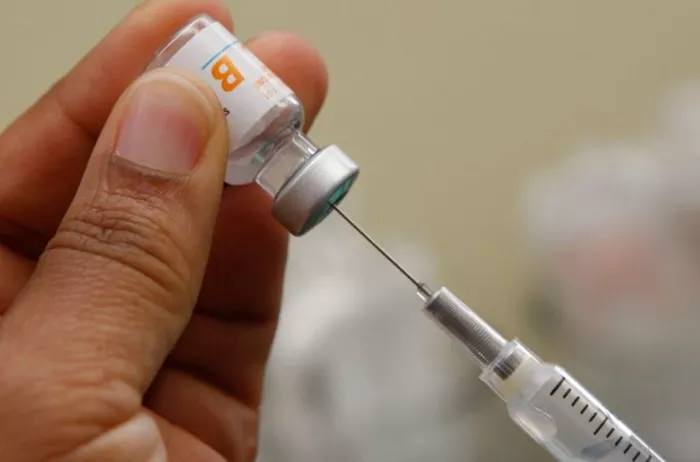
A key Centers for Disease Control and Prevention (CDC) advisory committee concluded a contentious meeting Thursday with significant decisions on childhood immunizations, voting to recommend against a common combination vaccine for young children and delaying a highly anticipated vote on the hepatitis B vaccine for newborns.
The CDC’s Advisory Committee on Immunization Practices (ACIP) voted 8-3 that the combined measles, mumps, rubella, and varicella (MMRV) vaccine should not be recommended for children under age 4. Instead, the panel advised that children in this age group should receive the measles, mumps, and rubella (MMR) vaccine and the varicella (chickenpox) vaccine as two separate shots.
However, in a separate vote, the committee decided not to change the MMRV recommendation for the federally funded Vaccines for Children (VFC) program, which provides immunizations for low-income families. This creates a potential disparity where children in the VFC program will retain the choice of the single combination shot, while others are advised against it. Several committee members expressed confusion over the implications of this split decision.
The committee postponed a vote on whether to delay the first dose of the hepatitis B vaccine for newborns until Friday. This longstanding policy, in place since 1991, has been highly effective, reducing infant hepatitis B infections from an estimated 18,000 annually to roughly 20 cases per year.
Understanding the MMRV Decision
Currently, parents have a choice for their child’s first vaccination around 12-15 months: a single MMRV shot or two separate injections (MMR and varicella). The primary reason for recommending separate shots is a small but increased risk of febrile seizures.
According to CDC data, the MMRV vaccine given as a first dose doubles the risk of a febrile seizure compared to receiving the shots separately. However, the overall risk remains very low, at approximately 4.3 cases per 10,000 doses. These seizures are typically brief and do not cause long-term harm.
The ACIP first acknowledged this risk in 2009 and advised that separate shots were preferred, though parents could still opt for the combination vaccine. CDC data shows about 85% of children already receive the vaccines separately.
Several experts questioned the need to revisit the guidance, as no new safety data has emerged.
Debate Over Newborn Hepatitis B Vaccine
The postponed vote on the hepatitis B birth dose has raised concerns among public health experts. Hepatitis B is a viral infection that can lead to chronic liver disease, cancer, and premature death. While adults often clear the virus, nearly 90% of infected infants develop lifelong chronic infections.
The current policy recommends the first dose within 24 hours of birth. The proposed change would delay the shot until a baby is one month old—but only if the mother has tested negative for hepatitis B.
Public health advocates argue the birth dose is crucial because the virus is highly contagious and can be transmitted through household contact with items like toothbrushes or razors, not just from mother to child during birth. Delaying vaccination leaves newborns unprotected during their first weeks of life.
A Committee in Transition
The ACIP has undergone significant recent changes. In June, HHS Secretary Robert F. Kennedy Jr. replaced all previous members. This week’s meeting, marked by procedural confusion and debate over established science, reflects this shift.
The committee’s recommendations are not final. The CDC will review them, considering insurance implications, before the acting director makes a final decision. ACIP’s guidance directly influences doctor recommendations, state vaccine policies, and insurance coverage.
The committee is scheduled to reconvene Friday to vote on the hepatitis B policy and COVID-19 vaccines for all age groups.
YOU MAY ALSO LIKE
Federal agency decertifies Miami organ procurement group
CDC Panel Recommends Limiting MMRV Vaccine for Young Kids
CPAP Machine and Driving: What Sleep Apnoea Patients Must Know
