
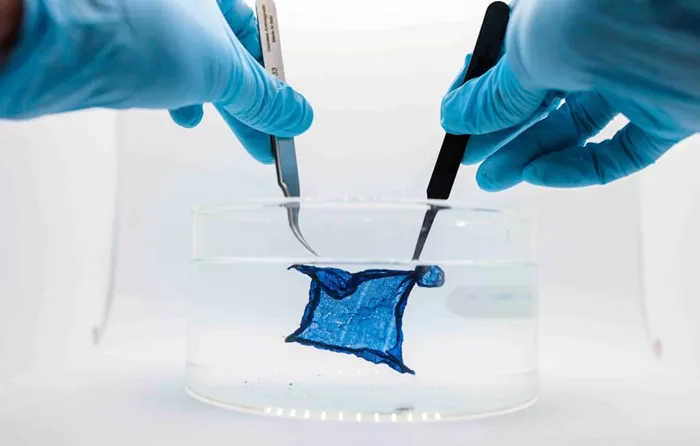
A novel hydrogel applied directly to vaginal tissue may offer relief from the negative effects of menopause, according to a study by researchers at the University of California San Diego.
Published in Advanced Materials, the study suggests this hormone-free treatment could help alleviate vaginal dryness and pain caused by genitourinary syndrome of menopause (GSM), a condition that affects millions of women.
GSM impacts up to 85% of women over 40, with 30% to 60% experiencing vaginal dryness and discomfort. The condition can disrupt sleep, sexual activity, travel, exercise, and social interactions. Alarmingly, 65% of women with GSM report dissatisfaction with current prescription or over-the-counter treatments.
“An estimated 47 million women in the U.S. reach menopause each year, making GSM a major public health issue in urgent need of research investment,” said Dr. Marianna Alperin, professor and vice chair for Translational Research in the Department of Obstetrics, Gynecology, and Reproductive Sciences, and co-director of the Center for Women’s Health Innovations at UC San Diego.
Menopause-induced hormonal changes thin vaginal tissues, shrink blood vessels, and weaken connective and smooth muscle layers that support sexual function and pelvic organs such as the bladder, uterus, and rectum. Immune cells in the reproductive tract also shift, producing inflammatory proteins that exacerbate tissue damage.
Current standard treatment, low-dose vaginal estrogen therapy, effectively thickens the vaginal lining but does not address deeper smooth muscle tissue responsible for structural support. Some patients and clinicians avoid estrogen therapy due to concerns about hormone-sensitive cancers, despite evidence showing minimal risk. The treatment can also be expensive and is not always covered by insurance.
The hydrogel developed by bioengineers in Christman’s laboratory is made from natural tissue scaffolding, known as the extracellular matrix. Previously, these hydrogels have aided cardiac tissue repair and undergone a Phase 1 FDA-approved clinical trial.
Partnering with Dr. Alperin’s team, Christman’s group tested the hydrogel as a potential treatment for GSM using a small animal model.
“We are not looking to replace estrogen treatments,” said Emma Zelus, first author of the study and preclinical research manager at the Sanford Stem Cell Institute. “We aim to provide an alternative for women who cannot or do not want hormone-based therapy, or for whom estrogen alone is insufficient.”
Study Design and Findings
In the study, 24 menopausal rats received daily intravaginal applications of hydrogel at two concentrations—6 or 8 milligrams per milliliter—or collagen or saline for 14 days. Vaginal tissue samples showed that hydrogel-treated rats had tissue resembling that of pre-menopausal animals, with increased smooth muscle thickness. The higher 8 mg/mL dose appeared more effective, likely due to a greater concentration of extracellular matrix proteins.
Early tissue sampling revealed that the hydrogel penetrated both surface and muscular layers, stimulating macrophages that support tissue repair. No adverse effects were observed in the animals.
Next Steps
Researchers plan to test different hydrogel concentrations in larger, longer preclinical studies and explore less frequent dosing schedules.
“A multidisciplinary approach is essential to solving women’s health challenges,” Dr. Alperin said.
The study was supported by the NIH National Institute on Aging and the NIH National Institute of Child Health and Human Development. Christman is a cofounder of Ventrix Bio Inc., which is developing a similar hydrogel for heart disease treatment.
