
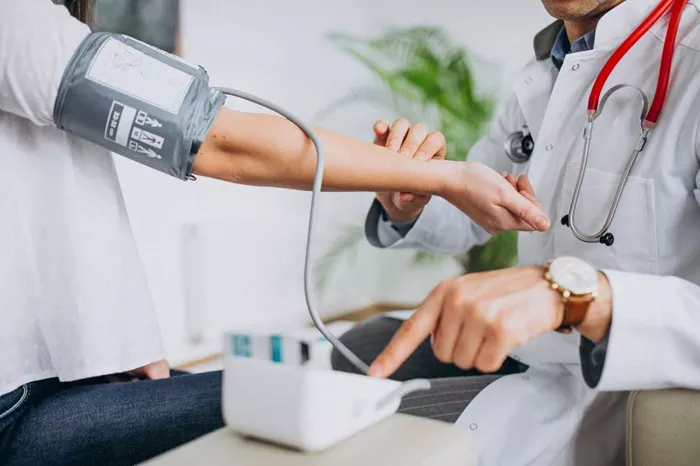
Health experts say accurate, easy-to-use blood pressure monitors are a critical tool for detecting hypertension, tracking treatment effectiveness and managing long-term cardiovascular risk. With dozens of devices on the market, cardiologists recommend upper arm monitors over wrist or finger devices for reliability and consistency.
“Monitoring blood pressure at home is one of the most powerful tools we have to detect hypertension early,” said Dr. Sam Setareh, attending cardiologist at Cedars-Sinai Medical Center. He added that home readings provide more accurate insight into everyday blood pressure than single office measurements, which may be affected by “white-coat syndrome.”
Top Expert-Recommended Blood Pressure Monitors
Health professionals highlighted nine upper arm devices for accuracy, ease of use and helpful features:
Omron 5 Series Upper Arm Monitor (BP7255): Offers Bluetooth connectivity, large display and adjustable cuff (arms 9–17 inches).
Homedics Relax+ 900 Series: App-compatible with backlit display, cuff fit detection and memory for two users (120 readings each).
Omron Complete 2-in-1 (BP7900): Combines blood pressure and ECG monitoring, Bluetooth-enabled and travel-friendly.
Braun ExactFit 1E: Affordable, easy-to-use monitor with large display and one-touch operation.
Omron 10 Series (BP7465): Takes multiple readings for accuracy, stores up to 200 past results.
Oxiline Pressure 9S Pro: Memory for two users (200 readings each) and alerts for incorrect cuff placement.
Omron 3 Series (BP7150): Budget-friendly, validated by the American Medical Association, stores up to 14 readings.
Vitaltrack Pro: Features stretchable cuff, dual-user memory, 10-year warranty and Vitalsense accuracy technology.
A&D Medical Multiuser Bluetooth Monitor: Detects irregular heartbeats and supports app connectivity with storage for 60 readings.
What to Consider Before Buying
Experts stress accuracy as the top priority when selecting a monitor. Dr. Raj Dasgupta, an internal medicine specialist, advised choosing clinically validated devices approved by trusted medical bodies.
Upper arm monitors remain the gold standard, said Dr. Pedro Martinez-Clark, medical director at Amavita Heart and Vascular Health, warning that wrist devices may misread by 10 mmHg or more if improperly positioned. Cuff size also matters: too large or too small can skew results, so users should measure arm circumference before purchase.
Ease of use is another key factor. Experts recommend devices with clear displays, simple controls, multiple reading averages, and memory storage. For tech-savvy users, Bluetooth or Wi-Fi connectivity allows data sharing with healthcare providers. Devices that flag irregular heart rhythms can be especially useful for older adults and those with atrial fibrillation.
