
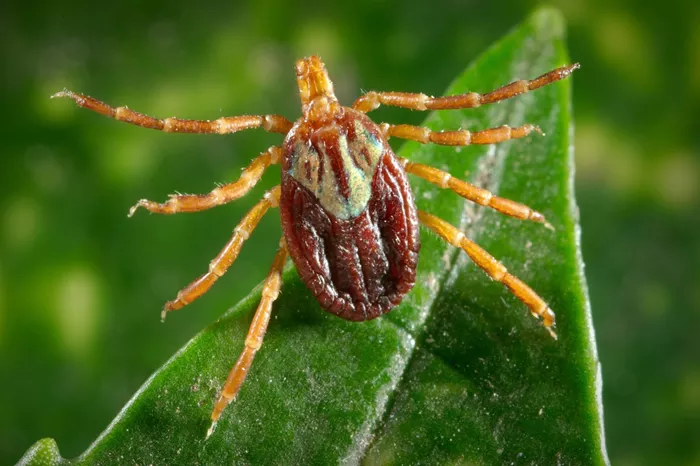
An invasive tick species is spreading across the United States, fueled by warming temperatures, and bringing with it a little-known but potentially debilitating infection. Scientists warn that this trend could have serious public health implications.
In May, researchers at the Connecticut Agricultural Experiment Station in New Haven confirmed that the longhorned tick had become a carrier of the bacterium responsible for Ehrlichiosis, a tick-borne infection that can cause severe symptoms and, in rare cases, death.
“I am afraid to say that it is a storm brewing,” said Goudarz Molaei, director of the lab’s tick-testing program. “Climate change will eventually almost eliminate winter in our region, and this tick, like other species, will be active year-round.”
Rising temperatures have shortened winters, allowing ticks to emerge earlier from hibernation and increasing the risk of human exposure.
Native to East Asia, the longhorned tick has already spread to Australia, New Zealand, and Pacific Islands, and it is now established in at least 21 U.S. states. Michigan reported its first sighting in late June. Scientists suspect the tick arrived in the U.S. via imported livestock or other animals.
First detected in New Jersey in 2017, the longhorned tick likely has been present in the country since at least 2010. “The fact it was here for so long without us knowing was a wake-up call,” said Dana Price, an associate research professor in entomology at Rutgers University.
Environmental modeling shows that large swaths of North America—from southern Canada through the continental United States—are suitable for the longhorned tick. This means both its geographic range and seasonal activity are increasing, raising the potential for disease transmission.
Ehrlichiosis, caused by the bacterium Ehrlichia chaffeensis, has grown increasingly common. The infection, primarily transmitted by lone star and blacklegged ticks, can lead to hospitalization in roughly 60% of cases and death in 1% of patients, according to the CDC. Symptoms typically appear one to two weeks after a tick bite and include fever, chills, muscle aches, headaches, and fatigue. Without prompt treatment, the disease can cause brain and nervous system damage, respiratory failure, uncontrolled bleeding, and organ failure.
Reported cases of Ehrlichiosis have surged from 200 in 2000 to 2,093 in 2019, though experts believe the disease is widely underdiagnosed. Rutgers University researchers estimate that 99% of cases go undetected.
The CDC noted a recent spike in emergency room visits for tick bites in July, surpassing figures from the previous eight Julys. In early July, authorities closed Pleasure Beach in Bridgeport, Connecticut, after multiple tick species, including the longhorned tick, were discovered there.
Manisha Juthani, commissioner of the Connecticut Department of Public Health, urged residents to take precautions as climate change alters tick activity patterns. “Wear long pants tucked into socks and perform tick checks on yourself, family members, and pets after outdoor activities,” she said.
Although longhorned ticks prefer livestock, their reproductive biology makes them a public health concern. A single female can establish large populations through parthenogenesis, or reproduction without mating. They can also acquire pathogens from other tick species via co-feeding transmission.
Molaei emphasized that discovering the Ehrlichia bacterium in longhorned ticks raises concerns about the tick’s potential to carry additional human pathogens. Both longhorned and lone star ticks feed on hosts such as white-tailed deer, increasing opportunities for disease spread.
Jennifer Platt, who contracted Ehrlichiosis in 2011, described her experience as life-altering. “The best way I’d describe it is I felt like death,” she said. She endured months of antibiotic treatment and physical therapy due to chronic symptoms, and she later developed Lyme disease and Babesiosis, which she attributes to the same tick bite.
Platt, who co-founded Tick-Borne Conditions United, hopes the recent findings will increase awareness among the public and healthcare providers about lesser-known but serious tick-borne diseases. “If you’re sick from a tick-borne disease, you can’t be who you are,” she said.
The World Health Organization estimates that over 17% of infectious diseases worldwide are transmitted through vectors such as ticks. In the U.S., tick-borne illnesses accounted for 77% of reported vector-borne cases from 2004 to 2016, and cases have more than doubled over the past 13 years.
YOU MAY ALSO LIKE
Michigan Men’s Stroke Recovery Delayed Over Insurance Dispute
FDA Signals Access for Unapproved Animal-Derived Thyroid Medications
HHS Revives Long-Dormant Task Force on Childhood Vaccine Safety
