
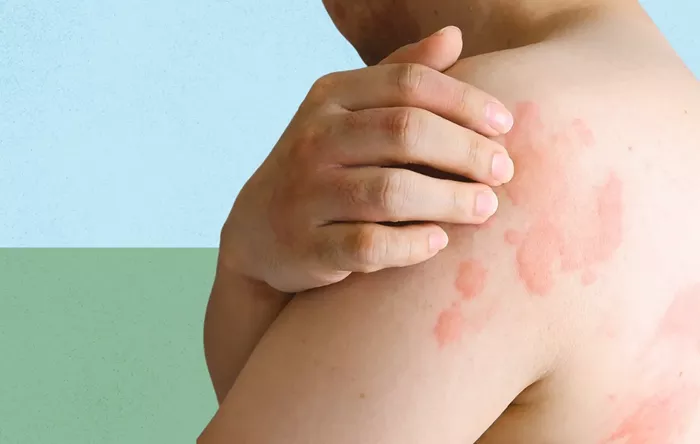
Chronic spontaneous urticaria (CSU) is notorious for causing sudden, itchy hives without warning. “It’s called spontaneous because there’s nothing you’re doing to trigger the hives,” explains Allen Kaplan, MD, a clinical professor of medicine at the Medical University of South Carolina. “You could go to bed feeling fine and wake up covered in hives.”
Hives associated with CSU typically last 12 to 24 hours, but there are several ways to alleviate the discomfort while waiting for them to subside.
Medical Consultation and Medications
Consulting a healthcare professional, such as an allergist, dermatologist, or immunologist, is crucial. Dr. Kaplan notes that the first-line treatment is a daily second-generation antihistamine, either over-the-counter or prescription. First-generation antihistamines are generally discouraged due to drowsiness and potential drug interactions.
Antihistamines block histamine receptors, reducing the formation of red, itchy welts. Approximately half of CSU patients notice relief within two to three days, particularly when medication is taken consistently. Some may taper off antihistamines after three to six months without flare-ups.
For patients unresponsive to antihistamines, Dr. Kaplan cites alternative therapies such as omalizumab, administered via injection every four weeks, or dupilumab, a biologic that reduces inflammation. In rare cases, the immunosuppressant cyclosporine may be used off-label, though it carries risks such as elevated blood pressure and impaired kidney function.
Practical Relief Measures
Cool Compresses: Applying a cold, damp cloth for 10–20 minutes can reduce inflammation and itching—unless cold triggers the hives.
Avoid Scratching: Scratching exacerbates irritation and may increase infection risk. Short, trimmed nails can further reduce this danger.
Pain Relievers: Nonsteroidal anti-inflammatory drugs (NSAIDs), such as aspirin or ibuprofen, can trigger hives in nearly a third of CSU patients. Acetaminophen is usually a safer alternative, but patients should consult their doctor for personalized advice.
Lifestyle Considerations
Dietary changes rarely prevent CSU, but patients who notice hives after certain foods should discuss possible food allergies with their physician. Some studies suggest a low-histamine diet—avoiding foods like cheese, chicken, fermented items, and tuna—may help, though evidence remains limited.
Stress can also exacerbate symptoms. Roughly one-third of CSU patients report that stress worsens their condition. While stress management may offer relief, Dr. Kaplan emphasizes that effectively controlling hives often reduces stress more than the reverse. Mental health counseling can help patients struggling with anxiety related to flare-ups.
By combining medical treatment with practical strategies and lifestyle adjustments, CSU patients can significantly reduce the frequency and severity of their itchy hives.
READ MORE
How Penis Filler Procedures Are Transforming Men’s Sexual Confidence
Two in Five Kiwi Men Die Early, Movember Report Shows
Vanishing Y Chromosomes Linked to Increased Heart Disease Risk in Men
