
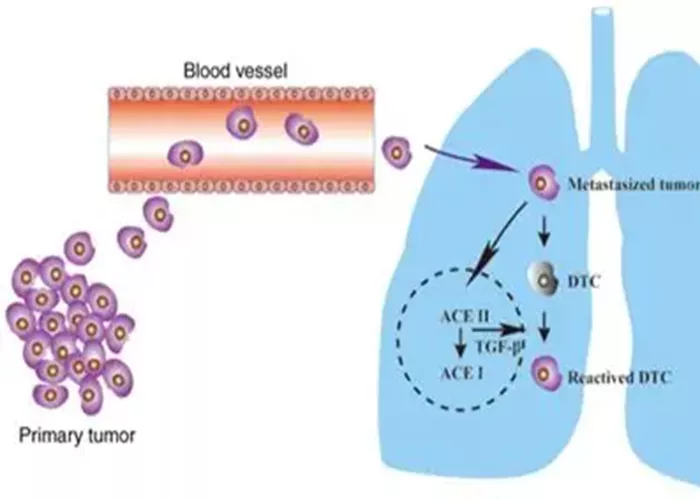
A respiratory infection, beyond causing annoying symptoms like stuffy nose, sneezing, and persistent cough, might quietly “knock on the door” and rouse a dormant “enemy” within the human body.
A groundbreaking study recently published in the journal Nature has revealed a startling truth: Respiratory viral infections such as influenza could act as “accomplices” in certain cancer metastases, activating cancer cells that have lain dormant for years.
Breast cancer is one of the most common cancers among women worldwide. Many patients achieve remission after treatment and enter a long-term “cancer-free” state. However, worryingly, some cancer cells, like stealthy enemies, can lurk in the body—hiding in the lungs, for instance—and enter a dormant state, neither proliferating nor causing trouble, as if in “hibernation.”
Yet, this “peace” could be shattered by a minor respiratory infection.
These cancer cells seem to be waiting for a signal, and the inflammation triggered by the virus is precisely that “activation code.” Scientists from the University of Colorado Anschutz Medical Campus conducted experiments on mouse models: When breast cancer mice developed respiratory infections, their previously calm lungs quickly became “active”—dormant cancer cells woke up and began dividing within days, and within just two weeks, metastatic lesions had significantly expanded.
The scientists then analyzed data from the UK Biobank (4,837 individuals across all cancer types) and the US Flatiron Health database (36,845 breast cancer patients). The findings in human data sounded a similar alarm: Cancer patients who had a respiratory infection faced double the risk of cancer-related death compared to those who did not. Among breast cancer patients specifically, the risk of lung metastasis increased by over 40% after an infection.
This suggests that respiratory infections may “open the door” and allow cancer cells to take advantage of the situation. It is possible that when the human immune system is fully engaged in fighting the infection, it inadvertently creates a “breeding ground” for cancer cells, with inflammatory signals acting like “nutrients” to stimulate their reactivation.
Research is endless, and science has no final conclusions. This study awaits further expansion of samples and in-depth analysis. It is not a reason for panic but a reminder: Health is a delicate balancing act. For cancer survivors, preventing respiratory infections is more important than ever. Simple actions like wearing masks, getting vaccinated, and washing hands frequently may serve as a “firewall” for one’s body.
Related topics:
Thousands Risk Unnecessary Prostate Cancer Treatment Due to Outdated Guidelines
E-cigarette Crisis: A Nightmare for Singaporean Parents
UCLA Scientists Breakthrough: Stem Cells for Sustained Anti-Cancer T Cells
