
In a groundbreaking study, researchers from the Leibniz Institute on Aging in Germany have made a discovery that could rewrite our understanding of cellular aging. Their findings, published in the latest issue of Science, point to a potential “master switch” mechanism behind the decline of cells as they age.
The team focused on the African turquoise killifish, a freshwater species known for its rapid aging process, making it an ideal model for studying age – related changes. As cells age, they typically become less efficient at performing their functions, and the reasons behind this decline have long puzzled scientists.
The Protein – Making Process and Its Breakdown
Protein synthesis is a fundamental process in cells. The “blueprint” for proteins is stored in the cell’s DNA. When a cell needs to make a specific protein, it copies the relevant DNA segment into a molecule called messenger RNA (mRNA). Usually, more mRNA means more of the corresponding protein is produced. However, as cells age, this straightforward relationship breaks down. Even when the amount of mRNA remains the same, the production of proteins can decrease.
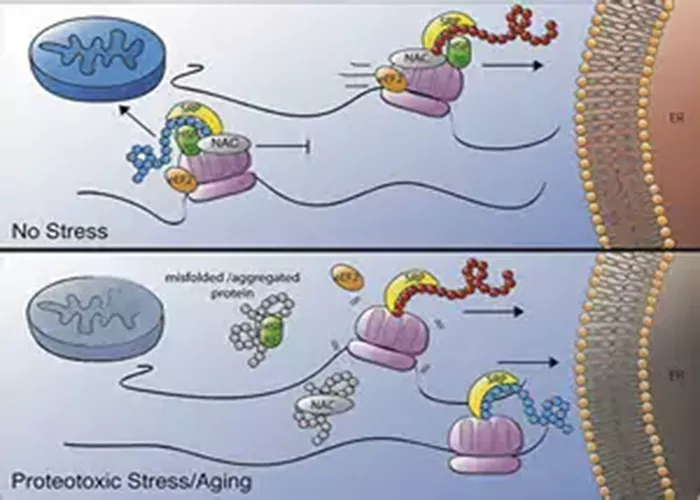
The scientists closely examined the ribosomes in the killifish’s brain. Ribosomes are the cell’s protein – making factories, reading the mRNA code and stringing together amino acids to form proteins. Using advanced techniques, the team captured the ribosomes’ positions on the mRNA, creating a sort of “snapshot” of the protein – making process.
Ribosome Roadblocks
The results were astonishing. As the killifish aged, the ribosomes frequently got stuck, or “stalled,” when decoding the genetic instructions for two specific amino acids: arginine and lysine. These two amino acids are commonly found in proteins that interact with DNA and RNA, which are negatively charged molecules.
Consequently, the proteins involved in vital cellular tasks, such as RNA production, RNA splicing, and DNA damage repair, were the most affected. These are the workhorse proteins that keep the cell functioning properly. For instance, efficient RNA synthesis is crucial for the cell to produce the various molecules it needs, while DNA damage repair ensures the integrity of the cell’s genetic material.
A Vicious Cycle of Aging
The researchers believe that the ribosomes’ stalling may be the root cause of many age – related cellular changes. As ribosomes stall more frequently, it becomes harder for cells to produce the proteins they need. This not only impacts the cell’s ability to carry out essential functions but also creates a feedback loop. The stalling may affect the ribosomes’ own production, further reducing the cell’s overall protein – making capacity. As a result, DNA damage accumulates, RNA synthesis and splicing become less efficient, and the cell’s functions gradually decline.
If these findings translate to humans, they could open up new avenues for developing therapies to combat age – related decline, particularly in the brain. Understanding the fundamental mechanisms of cellular aging is a crucial step towards potentially developing interventions that could slow down or even reverse some of the effects of aging. While much more research is needed, this discovery offers hope for a future where age – related cognitive decline may be mitigated.
Related topics:
Mental Health Apps GPT-5: ChatGPT Gets New Safety Guardrails
