
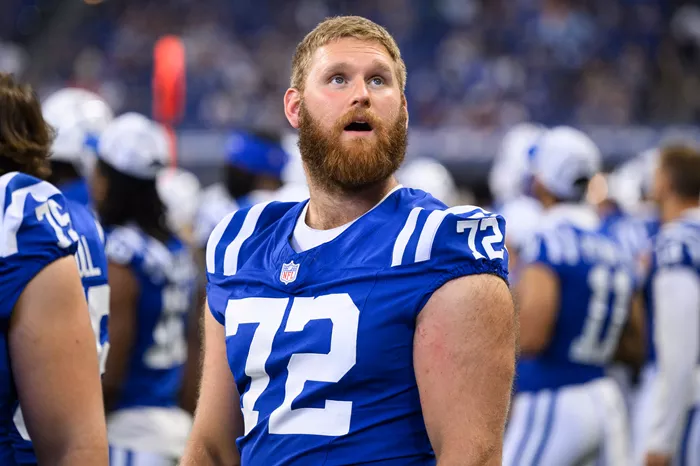
Indianapolis Colts offensive lineman Braden Smith is returning to the NFL field this season with a renewed outlook on life after confronting a devastating struggle with obsessive-compulsive disorder (OCD) that nearly cost him everything—including his life.
The 29-year-old right tackle revealed in a candid interview with ESPN that the 2024 season was marked not just by injuries or missed games, but by a harrowing internal battle that led him to contemplate suicide. Smith missed the final five games of the season while placed on the non-football illness list, stepping away from the game to focus on his mental health.
“I was just trying to be alive this time last year,” Smith shared. “I wasn’t thinking about anything. I just wanted to find joy in life, and for a while there, I didn’t feel like I was ever going to find that again.”
Smith’s condition had deteriorated to the point where his wife, Courtney, felt compelled to change the combination to their gun safe to prevent access to firearms. At his lowest, Smith said he believed he was just a month away from ending his own life.
To address the severity of his OCD, Smith entered an intensive treatment program where he spent 48 days undergoing psychotherapy and medication management. The results were inconsistent, prompting him to seek alternative therapies.
His path led him to Mexico, where he took part in holistic and psychedelic treatments. These included time in a traditional sweat lodge and the use of ibogaine, a psychoactive substance derived from a Central African shrub, and another psychedelic compound sourced from toad venom.
“That’s where I finally started seeing the breakthrough I needed,” Smith noted, describing the unorthodox treatments as a pivotal moment in his recovery.
After completing treatment and taking additional time to heal, Smith returned to the Colts’ training camp this spring. Now healthier, both mentally and physically—he had also struggled with a lingering knee issue—Smith says he feels more present and focused than he has in years.
“Last year, I was just kind of out there,” Smith admitted. “I was going through the motions. I didn’t have that edge players thrive on. This year, instead of obsessing over intrusive thoughts, I can channel that focus into my craft.”
With new starters expected at center and right guard, Smith’s return provides a stabilizing presence on the Colts’ offensive line. A second-round pick from Auburn in 2018, Smith was previously named to the Pro Football Writers Association’s All-Rookie Team and is now entering the final year of a four-year, $70 million contract. He recently restructured his deal, reducing his cap hit and bringing his salary down to $8 million.
As for what lies ahead, Smith isn’t rushing any career decisions. What matters most to him now is gratitude—for the game, his teammates, and life itself.
“You take things for granted until they’re almost taken away,” he reflected. “Now, just being able to play football, hang out with the guys, and enjoy each day—it’s awesome.”
Smith’s story is a powerful reminder that even professional athletes, often seen as paragons of strength and discipline, are not immune to the debilitating effects of mental illness. His openness may pave the way for more conversations around mental health in elite sports.
READ MORE:
