
The U.S. Food and Drug Administration (FDA) is calling on the Department of Justice to classify 7-hydroxymitragynine (7-OH)—a compound with powerful opioid-like effects—as a Schedule I controlled substance.
This move would effectively ban the sale and distribution of products containing synthetic 7-OH, which are widely available in gas stations, convenience stores, and online marketplaces.
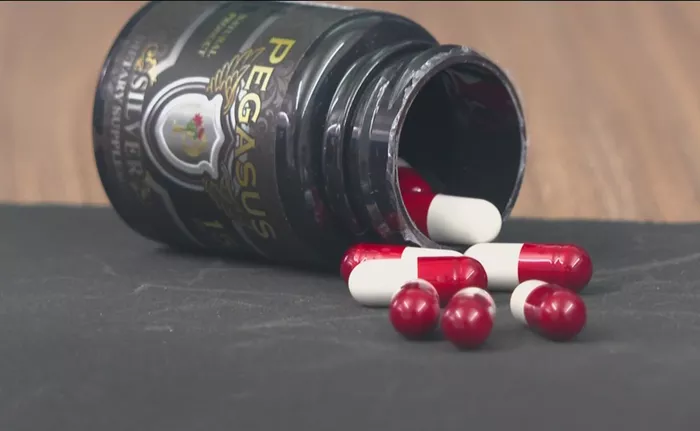
The compound, often found in unregulated tablets, drink powders, and gummies, is marketed as a natural supplement to ease pain, enhance focus, and elevate mood.
However, public health officials warn that 7-OH is potentially more potent than morphine and carries severe health risks, including liver damage, heart complications, seizures, withdrawal symptoms, and in some cases, death.
“We’ve seen a disturbing rise in reports of overdoses, poisonings, and ER visits linked to 7-OH,” said Jim O’Neill, Deputy Secretary of the U.S. Department of Health and Human Services, during a press briefing Tuesday.
“This is a recipe for public health disaster,” he added, noting the lack of warnings, dosage regulation, or quality control on products containing the compound.
Synthetic Version Far Stronger Than Kratom
7-OH is a naturally occurring chemical found in kratom, an herbal substance derived from the leaves of a Southeast Asian evergreen tree. While kratom contains only trace amounts of 7-OH, the synthetic versions sold under the “7-OH” label feature a concentrated, lab-created form of the compound.
These products are sometimes misleadingly advertised as kratom-based, although they are considerably more potent. The FDA distinguishes between traditional kratom products and these synthetic derivatives, with a primary focus on the latter due to heightened health risks.
FDA Seeks Schedule I Classification
FDA Commissioner Martin Makary confirmed that the agency has formally recommended 7-OH be designated a Schedule I substance—the most restrictive classification under the Controlled Substances Act. Drugs in this category are deemed to have no accepted medical use and a high potential for abuse, alongside substances like heroin and ecstasy.
This recommendation initiates a scientific and legal review by the Drug Enforcement Administration (DEA), which oversees drug scheduling. The classification process will involve a public comment period before any final ruling is issued.
Tom Prevoznik, Assistant Administrator at the DEA, emphasized the agency’s commitment to evidence-based decision-making:
“DEA will do what we’ve always done: follow science, follow the law, and do what’s right to keep our community safe.”
Community Concerns and FDA Enforcement
At Tuesday’s news conference, Health and Human Services Secretary Robert F. Kennedy Jr. highlighted the ease of access to these synthetic products, particularly in vulnerable communities.
“They’re marketed for children—gummy bears, bright colors, candy flavors. This is really a sinister, sinister industry,” Kennedy said, recalling his own past struggles with addiction and comparing the current situation to the widespread availability of heroin in the 1970s.
In June, the FDA sent warning letters to seven companies accused of unlawfully marketing 7-OH products. The agency stated that 7-OH cannot be legally included in food or dietary supplements due to insufficient safety data. Unlike prescription drugs, dietary supplements do not require FDA pre-approval, though companies are expected to conduct safety and contamination testing.
Makary stressed that the agency’s focus remains squarely on the synthetic, concentrated forms of 7-OH rather than natural kratom.
“We are going after the killer first,” he said.
Pushback from Advocates and Industry Groups
Despite growing concerns among health officials, advocacy groups are pushing back on the FDA’s proposal. The Holistic Alternative Recovery Trust, which promotes plant-based alternatives to opioids, criticized the agency’s actions as unsupported by real-world data.
“If 7-OH posed the kind of urgent danger that would justify emergency action, evidence would have been presented. It was not,” said Jeff Smith, the group’s national policy director.
Similarly, the American Kratom Association acknowledged the need for regulation but opposed categorizing kratom or its derivatives as controlled substances. The group supports efforts to impose age restrictions, labeling requirements, and concentration limits but maintains that kratom does not have a high potential for abuse.
In 2016, the DEA had attempted to classify kratom’s active compounds, including 7-OH, as Schedule I drugs. However, the plan was withdrawn after significant public opposition. According to the 2022 National Survey on Drug Use and Health, approximately 1.9 million Americans aged 12 and older reported using kratom that year.
With the FDA now renewing its efforts, the debate over regulating plant-derived psychoactive substances is heating up once again.
Related topics:
