
When neurons in the human body are damaged, RNA fragments produce proteins that aid in repair. However, in neurological diseases like amyotrophic lateral sclerosis (ALS) and spinal muscular atrophy, as well as spinal cord injuries, the mechanism that transports essential repair RNA to damaged cellular sites fails. In other words, RNA molecules “get lost”—unable to reach their target, turning injuries into permanent damage.
Now, researchers at Stanford University have developed a new CRISPR technology to deliver RNA to specific locations within neurons, allowing it to “regroup” and repair or regenerate damaged areas. Backed by the U.S. National Institutes of Health, this breakthrough lays the foundation for a novel therapy called spatial RNA medicine, enabling “targeted treatment” for neurological disorders and traumatic injuries.
CRISPR Transforms into an “RNA Postman”
Neurons, the longest cells in the human body (some exceeding 1 meter), rely on efficient RNA transport over long distances. Aging, injury, or mutations can disrupt this process. Recent research highlights that RNA’s intracellular distribution—where it acts—is as critical as its function.
“If therapeutic RNA doesn’t reach its destination, it’s useless,” said Dr. Lei Qi, senior author of the study published in *Nature* and associate professor of bioengineering at Stanford. The team sought to create a technology for reliable RNA delivery to precise cellular locations.
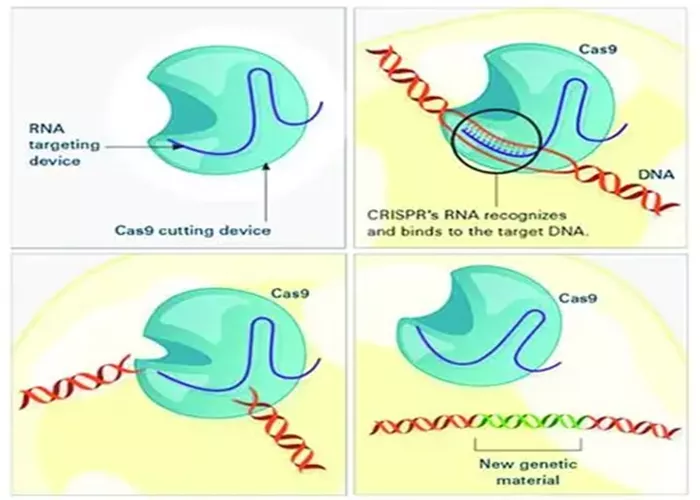
Their solution? Repurposing CRISPR as a “postman.” Unlike the well-known CRISPR-Cas9, which edits DNA, they used CRISPR-Cas13, a tool that targets single RNA fragments. Instead of modifying genetic material, Cas13 was engineered to transport existing RNA.
“Cas13 is like a pair of scissors, but we redesigned it to act as a courier,” Qi explained. “We ‘instruct’ it to carry RNA from point A to point B with pinpoint accuracy.”
Precision Delivery: Guided by Cellular “Addresses”
The system pairs Cas13 with specific targeting signals—essentially “addresses”—that direct RNA to desired locations. Each cellular compartment has unique “address molecules,” allowing researchers to guide RNA to different sites by introducing corresponding molecules.
This CRISPR-based “RNA delivery system” achieves unprecedented precision and control, marking a new era in RNA medicine.
CRISPR-TO: Unlocking Neuronal Regeneration
Named CRISPR-TO, the technology has already screened dozens of RNAs for their ability to promote neuron growth. In lab-grown brain neurons, CRISPR-TO delivered RNA to the tips of neurites—finger-like projections that form synapses with other neurons.
One standout RNA molecule increased neurite growth by 50% within 24 hours. The team continues to identify RNA targets that enhance neurite growth and regeneration, adding new tools to control RNA localization—an achievement previously unattainable.
Spatial RNA Medicine: A New Frontier
This breakthrough ushers in spatial RNA medicine, where RNA’s location within cells is as critical as its presence. The technology not only advances treatments for neurodegenerative diseases and spinal cord injuries but also improves the safety and efficiency of RNA-based drugs.
“We’re just beginning to understand how RNA’s spatial organization aids brain repair,” Qi noted. “This technology reveals which RNAs are key for better therapeutic outcomes.”
By enabling precise, programmable delivery of RNA to the body’s most critical “battlefields,” CRISPR-TO transforms how we approach cellular repair—offering hope for millions affected by neurological damage.
Related topics:
Autism in Adults Tied to Higher Mental Health Hospitalization Rates
Students Accuse Universities of Failing on Mental Health: Who Bears the Blame?
