
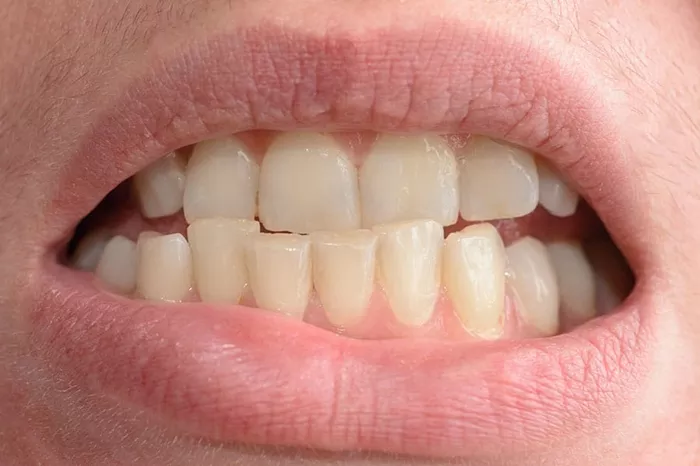
Braces, retainers, and jaw surgeries have become common tools in the pursuit of a straighter smile. But have crooked teeth always been a widespread problem? Emerging research suggests the answer is no. Our ancestors had straighter teeth—and their diets may explain why.
Modern-day malocclusions, or misaligned teeth, are significantly more common than in prehistoric populations. While ancient skulls show some irregularities, widespread dental crowding appears to be a relatively recent phenomenon. Experts now believe that changes in diet and lifestyle, particularly after the advent of agriculture, played a pivotal role in reshaping our jaws—and the way our teeth grow.
Farming, Food, and Facial Structure
Twelve thousand years ago, humans began shifting from a hunter-gatherer lifestyle to farming. With that change came a significant transformation in diet. Early humans regularly consumed tough meats, raw vegetables, nuts, and seeds—all of which required rigorous chewing. This mechanical stress promoted the development of larger, more robust jaws.
But as farming introduced softer foods like grains, cooked vegetables, and dairy, the amount of chewing needed dropped dramatically. “When you get your food straight from the environment, it’s probably a little grittier than stuff which has been cooked and processed,” explains Sue Herring, professor emeritus in orthodontics at the University of Washington.
As a result, our jaws didn’t need to be as large or strong. Over generations, the human mandible began to shrink. According to Dr. Myra Laird, assistant professor at the University of Pennsylvania’s School of Dental Medicine, “If you don’t need a huge mandible, it’s energetically costly to build that extra bone.”
Jaw Development Responds to Daily Stress
Interestingly, not all jaw changes happen over millennia. Our bones, including those in the face, are highly responsive to physical activity—even within one lifetime. Reduced chewing decreases muscle use, which in turn affects jaw structure. “If you switch to a liquid diet, you will not use your muscles as much and see some shape changes in your face,” says Laird, citing studies on non-human mammals.
In essence, softer diets weaken the stimulus for jaw growth. Over time, this has led to smaller jaws in many populations—but the number of teeth we grow hasn’t changed. This mismatch between tooth count and jaw space is at the heart of the modern malocclusion epidemic.
The Space Problem: Why Teeth Don’t Fit Anymore
When your jaw shrinks but your teeth stay the same, something has to give. For many, that means overcrowded, misaligned, or impacted teeth.
“The way your teeth come through is almost like a zipper,” explains Julie Lawrence, assistant professor of biological anthropology at the University of Nevada, Las Vegas. “If there isn’t enough room, they get stuck or overlap.” This is especially common with wisdom teeth, which often become impacted in smaller jaws.
Studies show that malocclusion rates increased significantly with industrialization, aligning with dietary changes toward processed, easier-to-chew foods. “The rate of malocclusion goes way, way up in modern humans,” says Laird. “That’s true across almost all populations.”
It’s Not Just About Food
Still, experts urge caution. While dietary changes explain much of the trend, they’re not the only factor. Crooked teeth have been found in ancient skulls as well—though preservation biases make it hard to get a complete picture. “Better teeth tend to be better preserved,” Lawrence points out. Additionally, fossil samples often miss confounding variables like missing or damaged teeth.
Genetics also plays a major role. Some bite issues—like extreme overbites or underbites—are often inherited and unrelated to lifestyle. Environmental factors, developmental conditions, and even habitual behaviors (such as thumb-sucking) can also affect dental alignment.
Crooked Teeth and Modern Aesthetics
Finally, our current awareness of dental irregularities may be contributing to the perception that misaligned teeth are more common than in the past. “We’re a lot more sensitive to cosmetic problems now,” says Herring. “I think we’re a lot more aware of malocclusions now than anybody was in the past.”
Today’s focus on perfect teeth—driven by media, beauty standards, and access to orthodontics—may amplify the visibility of what once went unnoticed.
The Practical Takeaway: Chew More, Early and Often
So, what can we do about it? While evolution won’t reverse overnight, experts recommend supporting jaw development from early childhood. Encouraging the consumption of firmer foods, especially during early growth years, may help stimulate stronger jaw muscles and better facial bone structure.
Additionally, avoiding over-processed diets and allowing natural oral development—rather than rushing into orthodontic interventions too early—may reduce future dental complications.
Our ancestors didn’t need braces. Their jaws were shaped by their food. Perhaps the modern smile could benefit from a little more crunch.
Related topics:
