
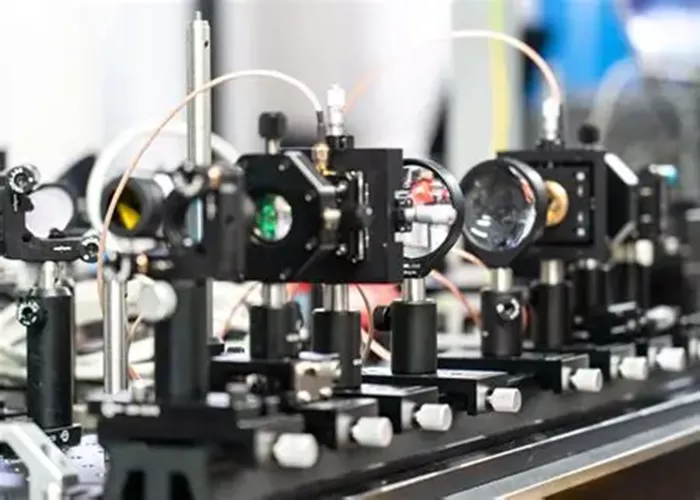
Recently, a research team from Tianjin University has developed a novel terahertz photoacoustic system. This system has for the first time achieved real – time monitoring of blood sodium levels in live mice without the need for blood sampling or labeling. Human experiments have also confirmed its potential for clinical applications. The related research results were recently published in the international journal Optica.
The Significance of Dynamically Observing Blood Sodium Concentration Changes
“Sodium ions are one of the most important electrolytes in the human body. They participate in regulating water – electrolyte balance, energy metabolism, and cell function, and play important roles in various aspects of immune and inflammatory regulation in the body,” said Tian Zhen, the corresponding author of the paper and a professor in the Department of Optoelectronic Science and Technology, School of Precision Instruments and Optoelectronics Engineering, Tianjin University, while demonstrating the importance of blood sodium detection in the laboratory. Picking up a blood collection tube, he pointed out that data shows that globally, 3 – 6 million patients experience blood sodium disorders each year. Among them, the prevalence of hyponatremia is 15% – 20%, and that of hypernatremia is 9%. The mortality rate of patients with severe blood sodium imbalance is as high as 40% – 60%.
Tian Zhen especially noted that critically ill patients with acute kidney injury, craniocerebral injury, or heart failure are more prone to blood sodium imbalance. Even mild hyponatremia can significantly increase the mortality rate of diseases such as heart failure. Severe blood sodium imbalance is closely related to nervous system complications such as cerebral edema, and the severity of clinical symptoms depends on the rate of change of blood sodium ions. “The rate of blood sodium fluctuation is directly related to the patient’s prognosis,” Tian Zhen emphasized. Close monitoring of the correction rate of sodium ions and suppression of the development of sodium imbalance are crucial for improving the patient’s prognosis and preventing permanent nervous system damage.
During the treatment of blood sodium imbalance, precise regulation is particularly critical. Tian Zhen explained, “If the blood sodium concentration is corrected too quickly, exceeding the safe limit of correction, it will lead to a rapid change in plasma osmotic pressure, thereby triggering osmotic demyelination syndrome, resulting in fatal and irreversible brain damage and endangering the patient’s life. Therefore, it is extremely important to prevent over – correction during the treatment process and accurately control the blood sodium concentration through continuous dynamic detection of blood sodium concentration.”
Currently, the gold standard for blood sodium detection is to draw blood samples and analyze them in a blood gas analyzer (BGA) or a laboratory. “This method is invasive and requires repeated blood draws. It not only increases the patient’s pain but also poses an infection risk,” said Tian Zhen.
An even more serious problem is the lag in detection. “The blood sodium level of critically ill patients may change every minute,” Tian Zhen said. Developing a non – invasive detection method that can dynamically observe blood sodium changes is extremely important.
New Technology Holds Promise for Non – invasive Continuous Detection
Based on these clinical pain points, the team innovatively adopted the “water – silent” terahertz photoacoustic technology and developed a new terahertz photoacoustic system. Tian Zhen introduced that this system provides a new solution for non – invasive real – time blood sodium monitoring.
Terahertz waves are located between the microwave and mid – infrared bands. They have advantages such as low energy, tissue harmlessness, and weak scattering, and are regarded as an ideal biomedical detection tool. However, the strong absorption of terahertz waves by water molecules has always limited their practical applications.
“To solve this problem, we use a modular system to emit terahertz waves, which can stimulate the vibration of sodium ions in the blood to generate ultrasonic waves, and then capture the signals through an ultrasonic transducer,” explained Li Jiao, the first author of the article and an associate professor at Tianjin University. The terahertz photoacoustic technology combines photoacoustic technology with terahertz spectroscopy technology, which can skillfully convert the absorbed terahertz energy into sound waves, effectively avoiding the strong absorption interference of water molecules on terahertz waves. Experimental results show that this technology can achieve long – term real – time monitoring of blood sodium concentration in live mice under label – free conditions, and positive progress has also been made in human volunteer trials.
“The clinical application prospects of this technology are broad,” said Tian Zhen. In the short term, in terms of blood sodium monitoring, non – invasive continuous detection will completely change the existing diagnosis and treatment mode and open up a new way for “needle – free diagnosis.” During treatment, doctors can grasp the patient’s blood sodium changes in real – time without drawing blood, which will significantly reduce the risk of nerve damage caused by excessive blood sodium correction during the treatment of blood sodium imbalance.
In the future, terahertz photoacoustic technology can also be extended to the non – invasive detection of proteins, sugars, and specific organic macromolecules, promoting the upgrading and iteration of the vital sign monitoring and disease diagnosis and treatment technology system.
What’s more exciting is that this technology also shows unique advantages in the field of neuroscience research. Li Jiao believes that due to the intrinsic absorption characteristics of terahertz photoacoustic technology for sodium ions, it is expected to achieve direct detection of nerve electrical activity without labeling in the future, which will provide a new tool for studying nerve activities mediated by sodium – potassium ions.
However, to achieve these application goals, the research team still needs to overcome several technical challenges. The primary issue is the signal attenuation effect of human tissues, which requires further improvement of the light source intensity and detection sensitivity of the system. Secondly, temperature control is also a key difficulty. Currently, the research team is evaluating the feasibility of oral mucosal tissue as a potential detection site. In addition, clinical trial design faces special challenges. How to establish a reliable verification method while ensuring the safety of subjects has become the current key research direction of the team.
“In this study, the successful blood sodium detection verified the feasibility of our technical route. The team will continue to optimize the system performance and promote this innovative technology to serve clinical practice as soon as possible, providing more accurate and safer detection methods for medical diagnosis and scientific research,” said Li Jiao.
Related topics:
6 Low-Impact Belly Fat Workouts Ideal for Men Over 50
Natural Bodybuilders Say Upright Rows Boost Side Delt Growth
Insomnia May Explain Low Life Satisfaction in Adults with ADHD
