
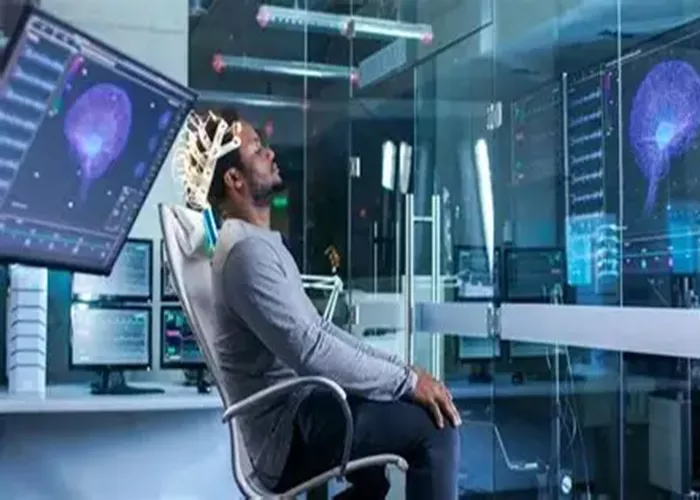
Brain-computer interface (BCI) technology creates direct communication between the brain and external devices by detecting and regulating brain activity, making “mind-to-mind dialogue” a reality. Recent breakthroughs in language-focused BCIs are revolutionizing care for speech-impaired patients.
Advancements in Language BCIs
BCIs translate brain signals into speech, overcoming challenges like signal decoding and real-time output. In March, China’s “Beinao-1” semi-invasive system, with 128-channel flexible electrodes, restored speech in ALS patients with minimal trauma. A U.S. team’s 256-channel implant, paired with deep learning, decodes speech in 10-millisecond intervals, capturing intonation and even humming—enabling natural communication for an ALS patient.
For Chinese, with 418 syllables and four tones, a Sino-team developed a multi-stream neural network achieving 76% accuracy in tone-syllable classification and 91% for single-character decoding. Future goals include decoding higher-level intent, critical for patients with language-organizing brain regions damaged.
Beyond Speech: Medical Transformations
BCIs extend beyond language:
A Swiss brain-spinal interface lets paralyzed patients walk by decoding movement signals and stimulating spinal regions.
A Sino-developed visual prosthesis, covering visible and infrared light, restored sight in lab animals, targeting retinal disease treatments. Deep brain stimulation treats Parkinson’s, while non-invasive techniques (e.g., transcranial stimulation) are tested for depression and Alzheimer’s.
Challenges Ahead
Key hurdles include ensuring long-term stability/safety of implants, reducing trauma, and improving decoding accuracy. Better understanding of brain processes is needed for efficient interaction. Ethical concerns—privacy, data security—are also in focus, with global efforts to establish standards for responsible development.
As tech and neuroscience advance, BCIs promise to redefine healthcare, bridging minds and machines for a more connected future.
Related topics:
Traumatic Birth Leaves Swansea Mother With PTSD and Depression
