
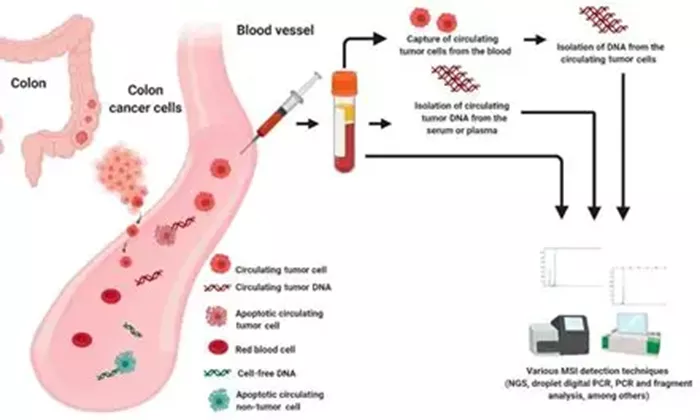
A team from the University of Chicago has developed a more sensitive liquid biopsy technique using RNA instead of traditional DNA to detect cancer. Testing patient blood samples, the method identified early-stage colorectal cancer with 95% accuracy—significantly outperforming existing non-invasive tests. The study was published in the latest Nature Biotechnology.
When tumor cells die, they release genetic material into the blood. Current standard liquid biopsies rely on these floating DNA fragments (cell-free DNA, cfDNA), but early-stage tumors shed little cfDNA as cells multiply rapidly, limiting diagnostic accuracy.
In contrast, RNA analysis reveals active gene activity, as RNA indicates cells are actively producing proteins. The team explored using cell-free RNA (cfRNA) instead, analyzing samples from colorectal cancer patients to detect both modified human cfRNA and RNA from gut microbes. Billions of bacteria inhabit the digestive system, and their behavior shifts as tumors develop. RNA modification levels reflect biological activity—more active organisms show more frequent modifications—a pattern confirmed in colorectal cancer samples.
Further research found distinct microbial RNA differences between cancer patients and healthy individuals. As tumors grow, surrounding microbes adapt to inflammatory environments, with faster turnover and more RNA released into the blood. This makes microbial RNA modification levels a potentially earlier indicator than human tumor DNA.
Existing fecal tests for DNA/RNA abundance achieve ~90% accuracy for late-stage cancer but drop below 50% for early stages. The new RNA modification-based method, however, maintains ~95% overall accuracy, even for early cancer.
RNA, acting as “work instructions” for protein synthesis, is continuously released by multiplying cancer cells—unlike cfDNA, which comes from dying cells and appears later. This blood test could detect early tumors, buying critical treatment time in the fight against cancer.
Related topics:
More Women Die of Heart Disease Than Breast Cancer…
