
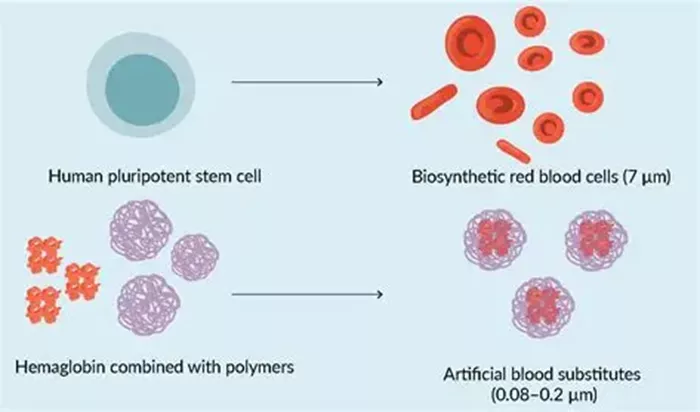
Researchers from the University of Konstanz in Germany and Queen Mary University of London have identified a critical molecular signal, chemokine CXCL12, that induces red blood cell precursors to expel their nuclei – a key step in red blood cell maturation. The findings, published in the latest Science Signaling, could pave the way for large-scale production of lab-grown blood.
Despite decades of research, lab-grown blood technologies have yet to reach clinical-scale application, mainly due to the complexity of the body’s natural blood production mechanism, which remains incompletely understood.
In the human body, blood is produced in bone marrow. Stem cells develop into red blood cell precursors, which eventually mature into red blood cells. Before maturation, these precursors must expel their nuclei to make space for more hemoglobin, enabling efficient oxygen transport – a process unique to mammals.
The researchers noted that blood production requires precise timing and conditions. They found CXCL12, abundant in bone marrow, triggers nucleus expulsion in red blood cell precursors, working with other factors at specific times. Adding CXCL12 to precursors at the right moment successfully initiates this key process.
Unlike most cells, which migrate when stimulated by CXCL12, red blood cell precursors actively transport the molecule into their cells – even the nucleus – to accelerate maturation and nucleus expulsion.
This breakthrough is hailed as a major advance in lab-grown blood research, potentially boosting production efficiency. If large-scale, personalized lab-grown blood becomes feasible, it could ease blood shortages, enable synthesis of rare blood types, and support precise treatments for cancer, genetic diseases, and more via autologous blood regeneration.
Related topics:
Experts Weigh In: Can Black Seed Oil Really Boost Men’s…
Just Two Workouts a Week Can Help Burn Fat and…
Many Older Men Avoid Discussing Urinary Incontinence With Doctors
